
History of Coffee: Origins, Cultivation, and Brewing Evolution
Coffee is more than a drink; it’s a global culture with roots stretching across centuries. Its story begins in Ethiopia, where Coffea arabica was first identified. This article examines that history: origins, cultivation, and how brewing methods evolved. You’ll learn which regions drove coffee’s spread, the main bean varieties and differences between Arabica and Robusta, how brewing developed, innovations in espresso machines, and practical tips for choosing the right machine. Knowing this history sharpens appreciation and helps you make better brewing choices.
Recent research echoes this view, showing coffee’s deep cultural and economic impact over centuries.
Coffee’s Global Journey: From Ethiopian Origins to Brewing Evolution
Coffee does more than energize; it connects people and became a major traded commodity after originating in Ethiopia over a thousand years ago. It adapted to many cultural and economic contexts, moving from an exclusive drink to widespread consumption. Its versatility — many preparation methods and evolving equipment, including the espresso machine — helped that spread.
Innovation and tradition in the coffee industry: the evolution of the ecosystem between new business models and cultural resistance. The case of Starbucks in Italy, 2023
Key Takeaways
- Coffee originated in Ethiopia and spread globally through Yemen, the Ottoman Empire, and Europe by the 17th century.
- Key coffee cultivation regions include Ethiopia, Yemen, and Brazil, each contributing unique flavors and historical significance.
- Arabica and Robusta are the main coffee bean varieties, differing in flavor, cultivation needs, and caffeine content.
- Arabica beans are prized for smooth flavors but require specific growing conditions and disease management.
- Robusta beans are hardier with stronger taste and higher caffeine, commonly used in espresso blends.
- Coffee brewing methods evolved from boiling to French press, drip, espresso, and pour-over techniques over centuries.
- Espresso machines have advanced from manual to programmable models, improving consistency and user experience.
- Reviews of espresso machines help home baristas choose equipment based on performance, features, and maintenance.
- Selecting the right espresso machine depends on type, features like temperature control, and budget considerations.
Where Did Coffee Originate and How Did It Spread Globally?
Coffee’s origins trace to Ethiopia’s coffee forests, where local populations first used Coffea arabica. From there the plant reached Yemen and became integrated into Islamic culture. By the 15th century cultivation spread across the Arabian Peninsula and coffeehouses, or qahveh khaneh, became social hubs. The drink later moved through the Ottoman Empire and into Europe by the 17th century, where it gained fashionable status. This journey highlights coffee’s social and cultural significance across regions.
What Are the Key Coffee Cultivation Regions and Their Historical Importance?
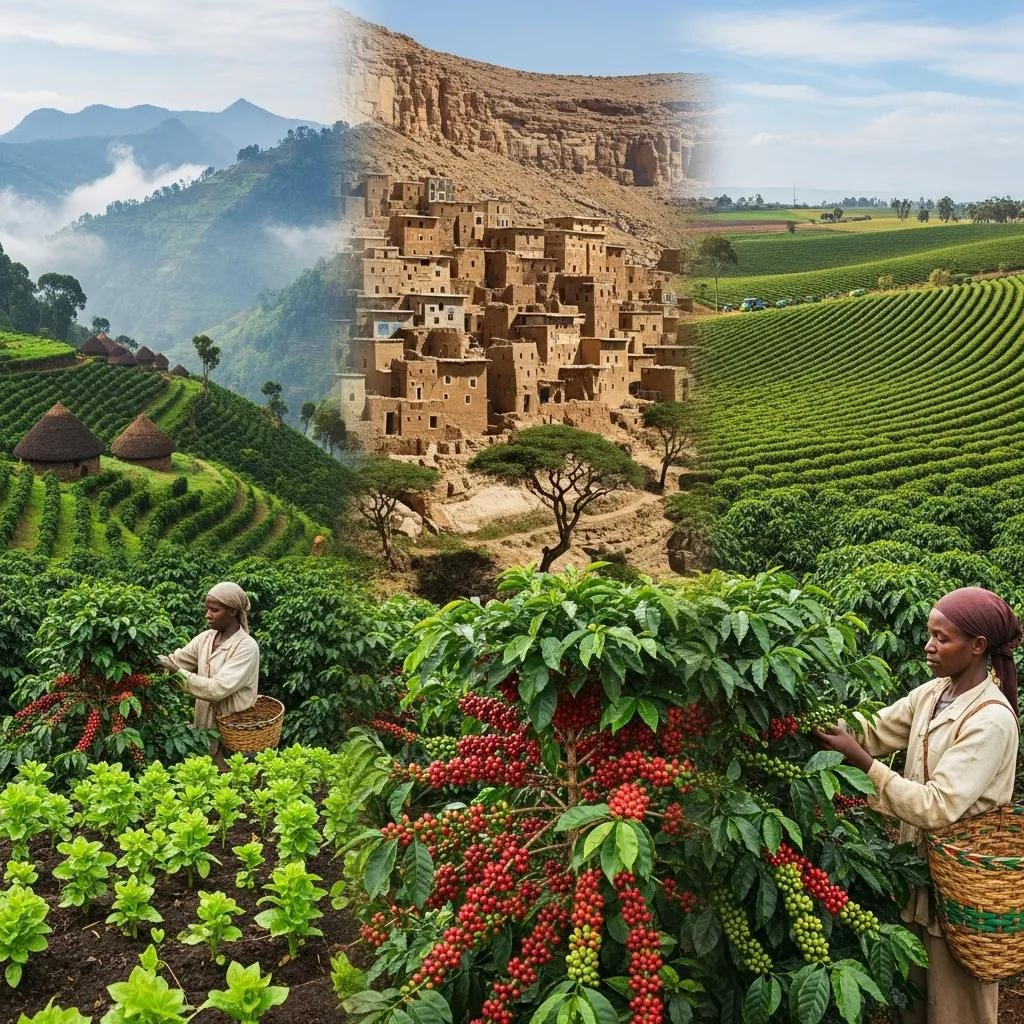
Coffee cultivation thrives in several key regions. Each region contributes distinct beans, flavors, and historical context that shape how coffee tastes today.
Ethiopia is recognised as coffee’s birthplace, where Coffea arabica grows in its native habitat. Yemen was a key early trade hub and is associated with Mocha coffee and distinct processing methods. Brazil is now the world’s largest producer and shaped large-scale cultivation practices. Together these regions explain much of the diversity in coffee flavour and character.
The global expansion of coffee cultivation also brought ecological challenges, as historical accounts document the spread of diseases.
Global Coffee Production: Historical Spread and Ecological Impact
Rapid growth in coffee production and consumption during the nineteenth and twentieth centuries transformed the coffee commodity chain and increased biological exchanges between regions. The coffee leaf rust epidemic, caused by the fungus Hemileia vastatrix, illustrates this impact: from roughly 1865 to 1985 the disease spread from its original focus in Ceylon to affect coffee zones worldwide.
Global rust belt: Hemileia vastatrix and the ecological integration of world coffee production since 1850, S McCook, 2006
What Are the Main Coffee Bean Varieties and Their Historical Development?
The two primary varieties are Arabica and Robusta, each with distinct traits and histories. Arabica is known for smooth, complex flavors and accounts for about 60–70% of global production. It grows best at higher altitudes and is more vulnerable to pests and disease. Robusta is hardier, with a stronger, more bitter taste, and is commonly used in espresso blends. Climate, altitude, and farming practices influenced how these varieties developed over time.
Research highlights the specific challenges and breeding efforts required to cultivate Arabica despite its superior cup quality.
Arabica Coffee Cultivation: Challenges, Breeding, and Production
Arabica coffees (60 % of current world coffee production) are generally sold at considerably better prices than robustas on account of superior beverage quality. However, costs of production are much higher, mainly due to more stringent demands for soil and climatic conditions, crop management, primary processing and control of several pests and diseases including the potentially very destructive coffee leaf rust (CLR) and berry disease (CBD). Breeding for disease resistance in combination with vigour, productivity and quality started in the early 1920s in India, but especially in the second half of the 20th century comprehensive breeding programmes have been implemented in several other coffee producing countries.
Next generation variety development for sustainable production of arabica coffee (Coffea arabica L.): a review, B Bertrand, 2015
How Do Arabica and Robusta Beans Differ in Origin and Characteristics?
Arabica and Robusta differ in origin and profile. Arabica, from the Ethiopian highlands, offers delicate aromas and usually has lower caffeine; it is sensitive to environmental changes. Robusta, native to parts of sub‑Saharan Africa, is more resilient and has higher caffeine and a stronger, more bitter taste. Robusta is common in instant coffee and espresso blends for added body and crema. Knowing these differences helps you choose beans for your preferred flavour and brewing method.
How Have Coffee Brewing Methods Evolved Over Time?
Brewing methods evolved with technology and taste. Early techniques used boiling; the French press in the 19th century introduced fuller extraction. Later came drip, espresso, and pour‑over methods. Each technique extracts flavours differently, offering a range of sensory experiences and revealing the craft involved in making coffee.
What Are Traditional and Modern Espresso Machine Innovations?

Espresso machines moved from manual lever designs to technology that improves consistency. Modern features—programmable settings, temperature control, and built‑in grinders—help maintain stable extraction and make espresso accessible to home baristas. These advances let you experiment while keeping results reliable.
Why Are Espresso Machine Reviews Important for Home Baristas?
Reviews help home baristas pick equipment that matches their needs. They compare performance, durability, and features so you can assess ease of use, maintenance, and a machine’s ability to pull consistent shots. Use reviews to match a machine to your skill level and brewing goals.
How to Choose the Right Espresso Machine Based on Historical and Technical Insights?
Choosing the right espresso machine involves considering the machine type, the features you need, and your budget.
- Types of Machines : Options range from manual lever machines to fully automatic models, each offering different levels of control and convenience.
- Key Features : Look for machines with temperature stability, pressure control, and ease of cleaning to ensure optimal performance.
- Budget Considerations : Determine your budget and explore machines that offer the best value for your needs, balancing quality and cost.
Understanding these criteria helps you select a machine that improves your brewing and fits your routine.
Frequently Asked Questions
What are the health benefits of drinking coffee?
Coffee is a source of antioxidants and has been linked in studies to a lower risk of conditions such as Parkinson’s disease, type 2 diabetes, and certain liver diseases. Caffeine can boost alertness and mood. Drink in moderation, since excessive intake may cause anxiety or sleep disruption. Consult a healthcare professional for advice tailored to your health.
How does the coffee roasting process affect flavor?
Roasting drives chemical changes in green beans that create aroma and taste. Lighter roasts preserve origin characteristics—often fruity or floral—while darker roasts bring bolder, chocolatey or smoky notes. Roast level also alters acidity and body, so it directly affects the cup profile.
What is the significance of coffee in different cultures?
Coffee has deep cultural roles worldwide. In Ethiopia, coffee ceremonies symbolise hospitality and community. In Italy, espresso is woven into daily life and social routines. In Sweden, “fika” encourages regular coffee breaks to build social connection. These traditions show coffee’s role beyond a simple beverage.
What are some common coffee brewing mistakes to avoid?
Small errors can spoil a brew. Using water that’s too hot scorches coffee and causes bitterness. Stale beans or the wrong grind size lead to under‑ or over‑extraction. Measure coffee and water for consistency, and clean equipment regularly to prevent off‑flavours.
How can I store coffee beans to maintain freshness?
Store beans in an airtight container in a cool, dark place away from heat and moisture. Avoid the refrigerator; temperature swings cause condensation. A canister with a one‑way valve releases gases while keeping air out. For long‑term storage, freeze portions you won’t open repeatedly.
What are the environmental impacts of coffee production?
Coffee farming can drive deforestation, high water use, and pesticide runoff that harms biodiversity. Sustainable approaches—shade‑grown systems and organic practices—reduce these impacts. Supporting certified organic or fair‑trade producers helps promote environmentally responsible farming.
What innovations are shaping the future of coffee production?
Innovations focus on sustainability and efficiency. Precision farming and drone monitoring help optimise yields and reduce inputs. Breeding disease‑resistant varieties tackles climate and pest pressures. New processing methods, like anaerobic fermentation, can enhance flavour. These advances boost quality while supporting long‑term sustainability for producers and consumers.
Conclusion
Knowing coffee’s history improves appreciation and guides practical brewing choices. From Ethiopian origins to modern espresso technology, each element shapes the global coffee culture we enjoy. Exploring varieties and methods can help you elevate your home brewing. Discover our curated selection of espresso machines and start your journey towards perfecting your brew today.