

Prevent Static When Grinding Espresso Beans: Practical Tips for Cleaner, More Consistent Grinds
Static electricity is a common nuisance when grinding for espresso — grounds cling, scatter, or form clumps and that hurts consistency. Understanding the main causes and a few practical fixes helps you get an even grind and more predictable extraction. Below we cover the core science, humidity’s role, grinder choices, and actionable tips and accessories to reduce static.
Key Takeaways
- Static comes from friction between grounds and grinder parts.
- Plastic parts and certain coatings generate more charge than metal.
- Static causes clumping and uneven extraction.
- Higher humidity dissipates charge and reduces cling.
- Humidifiers and proper bean storage preserve moisture and lower static.
- Burr grinders produce more uniform particles and generally less static than blades.
- Anti‑static coatings and metal parts reduce cling.
- Regular cleaning plus brushes or sprays keeps static manageable.
- Grinding where humidity is slightly higher helps grounds re‑equilibrate and reduces scatter.
Why Does Static Electricity Occur in Espresso Coffee Grinders?
Static builds mainly because grinding creates friction between coffee particles and grinder surfaces, transferring electrical charge to the grounds. Materials, burr geometry, gap consistency, and grind speed all affect how much charge accumulates. Knowing these factors helps you choose equipment and habits that limit static.
Even with a general understanding, accurately predicting or controlling triboelectric charging is still difficult.
Challenges in Controlling Triboelectric Charge
Controlling or predicting the amount of triboelectric charge is difficult because the precise mechanism behind triboelectric charging remains not fully understood.
Triboelectric charging of 3‑in‑1 coffee mixes: Formulation and fouling, 2021
What Causes Static Buildup During Coffee Grinding?
Friction is the main cause: grounds rub against burrs, chutes, and collection cups and pick up charge. Plastics and some coatings hold charge more than stainless steel, and burr shape, gap tolerance, and grind rate change the exposed surface area and friction, altering static levels.
How Does Static Affect Espresso Grind Quality?
Static makes particles cling and form clusters, producing uneven doses and poor distribution in the puck. That yields uneven extraction — some particles over‑extracted, others under‑extracted — and flatter, less reliable espresso. Reducing static improves uniformity and clarity in the cup.
How Does Humidity Influence Static in Coffee Grinding?
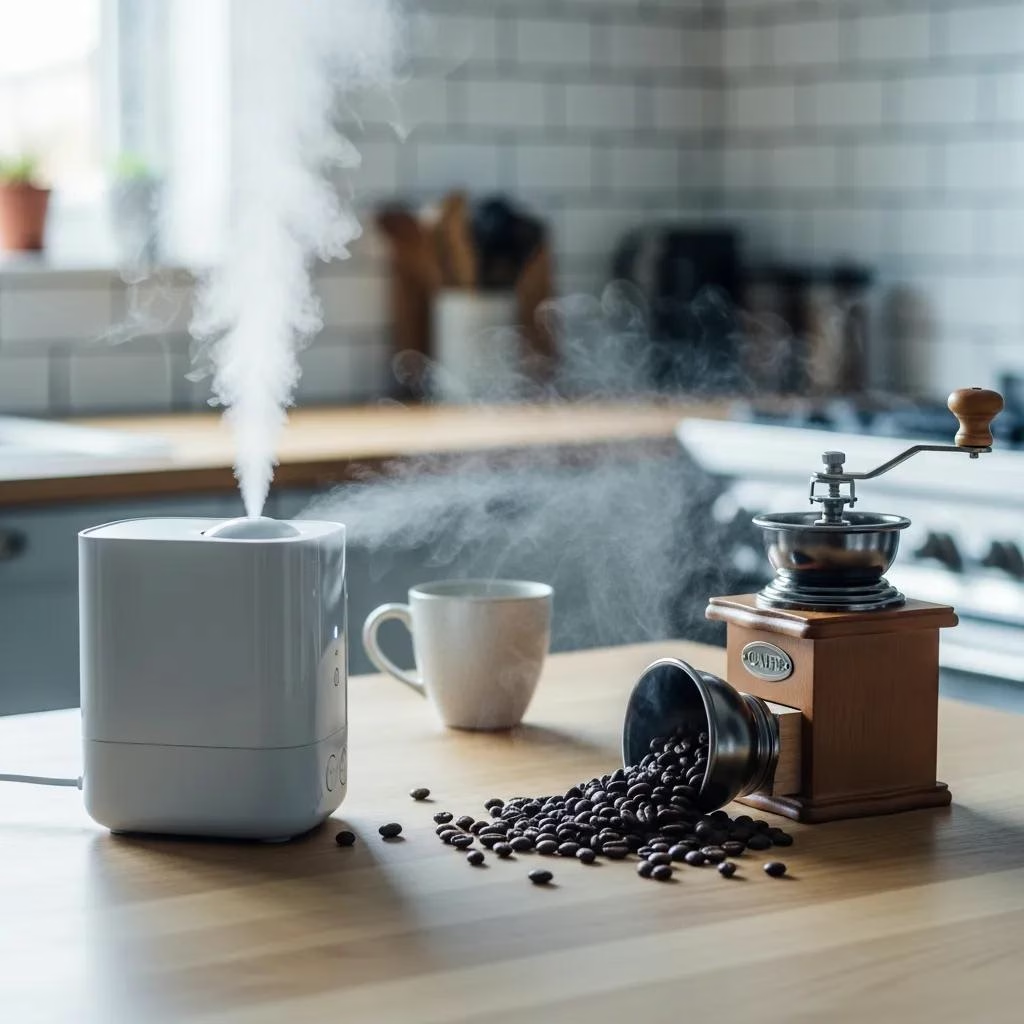
Humidity is an effective, simple lever. Moist air lets tiny water molecules form conductive paths that let charge bleed off surfaces; in dry air, charges persist and grounds cling. Managing local moisture in your prep area often yields the biggest drop in static with minimal effort.
Research supports that managing internal moisture increases grind uniformity by reducing static.
Reducing Static for More Uniform Grinds
Reducing static through moisture control increases the uniformity of coffee grounds. Internal moisture depends on factors like bean age and the environment.
Moisture Controlled Triboelectrification During Coffee Grinding, EJ RHEINGOLD, 2024
What Is the Role of Environmental Humidity in Static Reduction?
Higher relative humidity creates pathways for charge to dissipate, so fewer clingy bits and easier dosing. Dry conditions strengthen electrostatic attraction and clumping, which is why static is often worse in winter or arid climates.
How Can You Control Humidity to Minimize Static?
To manage humidity and cut static, try these practical approaches:
- Use a Humidifier: A small humidifier near the prep area in dry seasons raises local humidity and reduces static.
- Store Beans Properly: Keep beans airtight to preserve natural moisture and slow drying that increases static.
- Grind in a Slightly Humid Space: When possible, grind where household humidity is higher (for example near kitchen steam).
Grinding increases a bean’s surface area, which makes it more responsive to ambient moisture and helps it re‑equilibrate with the environment.
Grinding Increases Coffee’s Moisture Interaction
Grinding raises coffee’s surface area and its interaction with the environment, which affects how the grounds absorb moisture.
Roasting, grinding, and storage impact on thermodynamic properties and adsorption isotherms of arabica coffee, GHH de Oliveira, 2017
Which Grinder Types and Features Help Reduce Static in Espresso Grinding?
Design, materials, and features all influence static. The right combination makes dosing and distribution easier so you get a more consistent puck and better shots.
Why Are Burr Grinders Preferred for Static Reduction?
Burr grinders crush between two burrs to create uniform particle sizes rather than chopping, which reduces friction spikes that add static. Many use metal parts and tighter tolerances that lower charge build‑up compared with plastic‑heavy designs.
What Grinder Features Prevent Static Cling in Coffee Grounds?
Look for these features when static is a concern:
- Anti‑Static Coatings: Surfaces treated to dissipate charge help grounds release cleanly.
- Smarter Design: Enclosed or shaped collection areas reduce scatter and contain charged particles.
- Stainless Steel or Metal Parts: Metal components tend to hold less static than some plastics.
What Are the Best Anti-Static Tips and Accessories for Espresso Grinders?
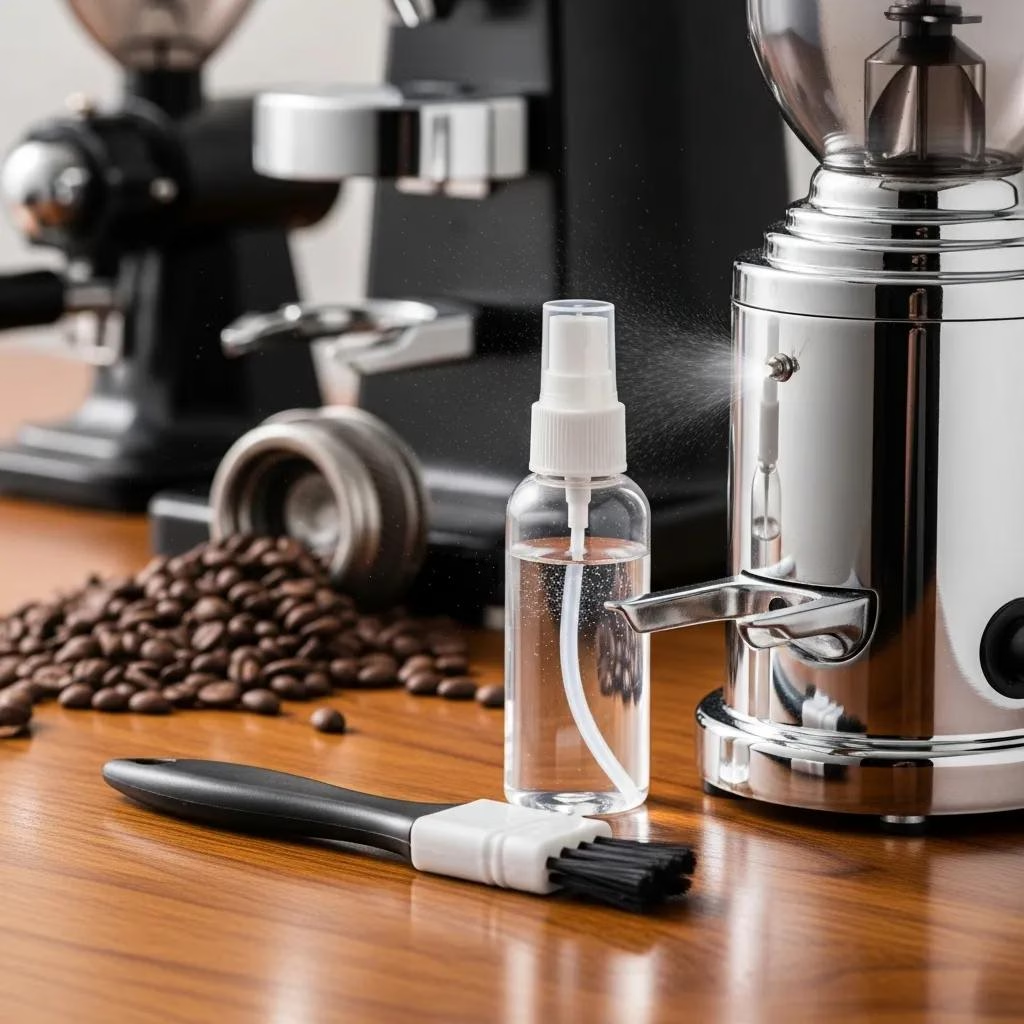
Small habits and a few inexpensive accessories greatly reduce static. The steps below are practical and quick to adopt.
How Do Anti-Static Devices and Accessories Work?
Anti‑static brushes clear clingy particles; light mists or purpose sprays add tiny surface moisture to lower charge; and built‑in anti‑static elements use conductive materials or coatings. Combined, these tools make dosing neater and reduce waste.
What Cleaning and Maintenance Practices Reduce Static?
Routine care keeps static from worsening. Try these steps:
- Regular Cleaning: Remove old grounds and fines frequently to reduce friction and charge.
- Proper Storage: Store the grinder and removable parts clean and dry to avoid residues that change static behavior.
- Use Anti‑Static Sprays or a Light Mist: A sparing, purpose‑built mist or spray can help in some setups — test carefully to avoid damage.
Combine basic maintenance with humidity control and a brush or spray, and dosing becomes more predictable with less mess.
Frequently Asked Questions
What are the signs of static buildup in coffee grinding?
Signs include grounds sticking inside the grinder, clumps that won’t settle, grounds scattering when dosing, or powder that won’t flow into the portafilter. These point to electrostatic attraction affecting dose and distribution.
Can the type of coffee beans affect static buildup?
Yes. Higher‑oil beans (often darker roasts) typically generate less static than dry, lighter roasts. Older, dried beans are more prone to static, so proper storage to preserve moisture helps.
How does temperature affect static in coffee grinders?
Temperature plays an indirect role: higher heat can increase friction and volatility, which may raise static; cooler, stable temperatures help reduce surprises. Keep your prep area relatively cool and steady when possible.
Are there specific brands known for low-static grinders?
Several reputable manufacturers design grinders with materials and engineering that reduce static. Brands such as Baratza, Breville, and Rancilio are often recommended; check reviews and specs for anti‑static features.
What role does grinder maintenance play in static reduction?
Maintenance is essential. Regular cleaning removes residues and fines that disrupt flow and increase charge buildup. Clean burrs and chutes and replace worn plastic parts to keep behavior consistent.
Can using a different grinding technique help with static?
Yes. Shorter grind bursts limit heat and friction, and tapping or gently shaking the collection cup after grinding helps loosen clingy particles. Small technique changes often make a noticeable difference.
Conclusion
Static need not be part of your espresso routine. With basic knowledge and a few targeted changes — humidity control, choosing grinders with suitable materials, regular cleaning, and simple accessories — you can reduce static, dose more cleanly, and pull more consistent shots. Start with the easiest fixes and adapt to what works in your kitchen and workflow.