
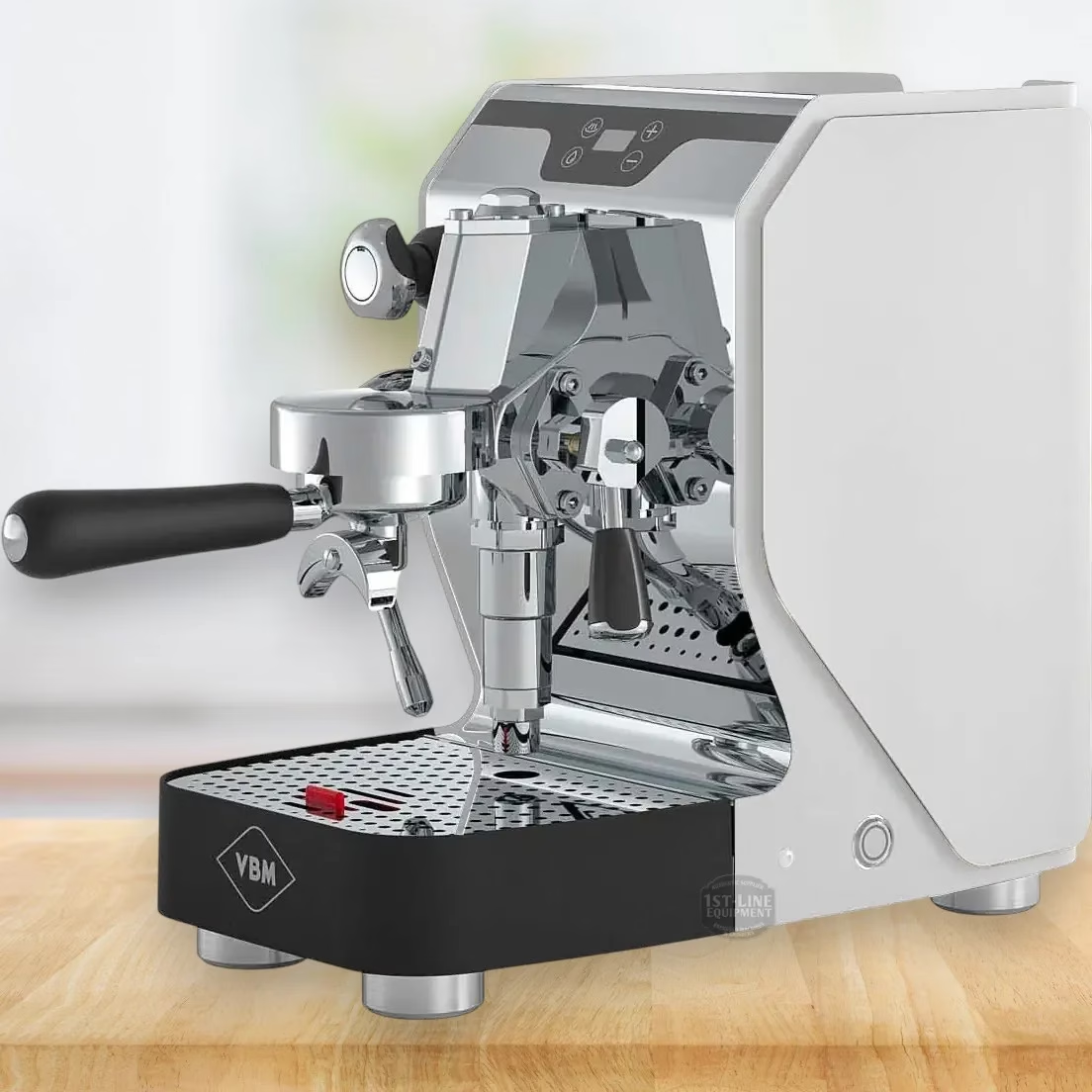
VBM espresso machines pair engineered hardware with defined service protocols for professional use. This article summarizes core components, operational characteristics, and preventive maintenance practices that affect reliability and beverage quality.
Design Features
VBM designs emphasize thermal stability, throughput, and serviceability. Common options include heat-exchanger or dual-boiler architectures, electronic temperature control for repeatable extraction, and programmable volumetrics for consistent shot yield.
For procurement and spare parts, 1st-line Equipment LLC supplies VBM models and components to support consistent extraction and operational uptime.
Key Components
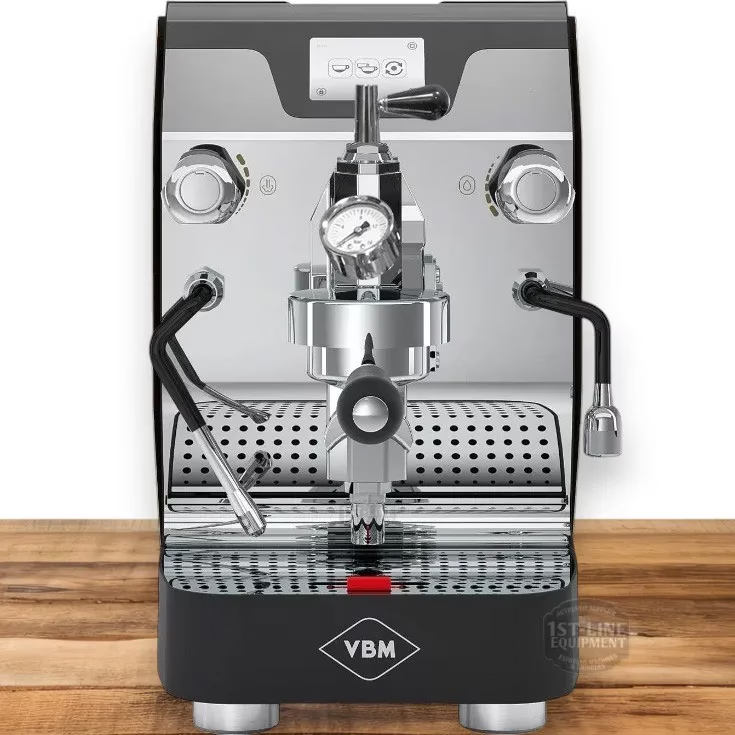
Primary assemblies determine extraction control and steam performance; understanding them helps prioritize maintenance.
Group Head : Delivers even water distribution across the puck for consistent extraction.
Valves and Sensors : Regulate flow and pressure to maintain brewing conditions.
Steam Wand : Produces steam and controls entrainment for milk texturing.
The table below summarizes each component’s function and routine maintenance requirements:
Maintained as a system, these assemblies support repeatable extraction and reliable steam delivery; following service schedules reduces failures.
Essential Maintenance Practices
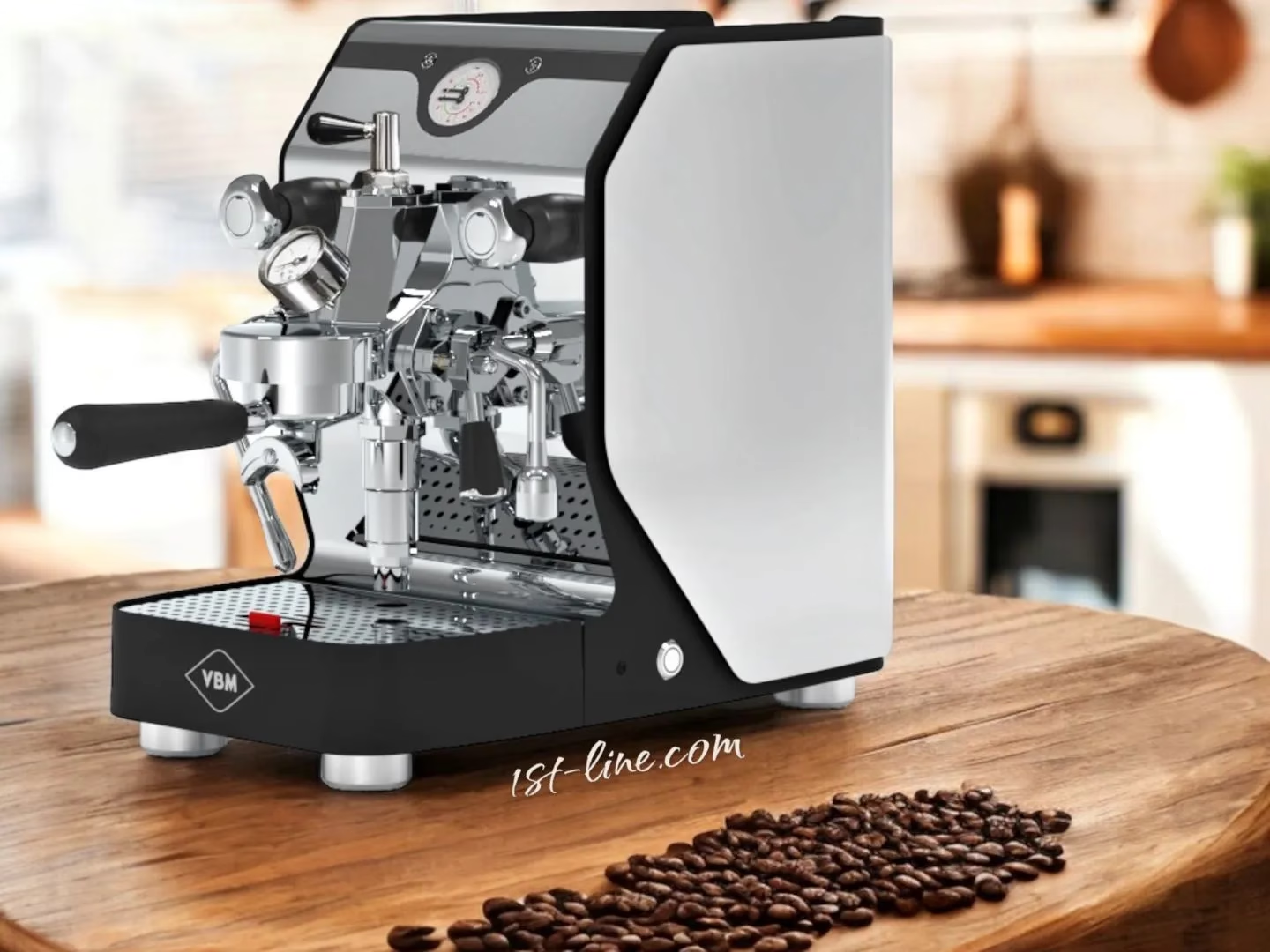
Core routines remove oils and mineral deposits and replace wear items to preserve specifications and beverage quality.
Regular Cleaning : Wipe and backflush group heads; purge steam wands after use.
Descaling : Schedule every 1–12 months based on local water hardness.
Component Replacement : Replace gaskets, screens, and filters on a lifecycle schedule to avoid leaks and performance loss.
Consistent service reduces incidents, sustains extraction consistency, and extends mean time between failures (MTBF).
Academic research supports the role of cleaning procedures and machine parameters in espresso quality.
Espresso Machine Parameters & Cleaning Procedures
Coffee grind size, dose, and water pressure were evaluated. Machine-cleaning procedures were applied to the different group heads of each machine.
Correlating espresso quality with coffee-machine parameters by means of association rule mining, D Apiletti, 2020
Which Maintenance Intervals Maximize Machine Longevity?
Use a tiered schedule: daily cleaning of brew and steam interfaces; descaling every 1–12 months depending on hardness; inspect or replace gaskets and filters every 6–12 months.
How Does Accessory Compatibility Facilitate Efficient Upkeep?
Fit and material compatibility are important. Use manufacturer-approved tools and consumables to minimize service risk and ensure correct tolerances.
What Are the Key Boiler Technologies in VBM Espresso Machines?
VBM offers single boiler, heat-exchanger and dual-boiler configurations. Single boilers have a button or switch to get to steam mode; primarily used for espresso only. Heat-exchanger systems support high throughput from a single boiler; dual boilers give independent temperature control for brew and steam.
Further studies analyze boiler system intricacies and their effects on machine design and functionality.
Espresso Machine Boiler Systems & Components
Single- and double-boiler systems and temperature adjustments were investigated. These systems include more components than a single boiler.
Open Source Espresso Machine for Makers, 2019
How Does the Heat Exchanger Boiler Enhance Temperature Stability?
Heat-exchanger designs use thermosiphon flow to keep a hot-water zone while delivering brew water at controlled temperatures, helping preserve stable extraction across shots.
Precise temperature control is essential to reach target sensory attributes.
Brewing Temperature & Bar Espresso Machine Design
Electronic sensing methods were applied to evaluate the effect of brewing temperature on the sensorial properties of espresso coffees (ECs) produced by a bar machine capable of operating with constant, increasing, and decreasing water temperature profiles.
Application of electronic senses to characterize espresso coffees brewed with different thermal profiles, S Buratti, 2017
What Are the Advantages of Dual Boiler Systems in Commercial Use?
Dual boilers allow simultaneous steaming and brewing with independent setpoints, maintaining temperature during sustained peak demand.
How Do VBM Pressure Systems Optimize Espresso Extraction?
Integrated regulation and sensors apply target pressure profiles during extraction, which affects solute extraction rates and crema.
Crema formation and quality are critical indicators of shot preparation, as documented by scientific investigations into its physical and chemical properties.
Espresso Crema: Quality Marker & Foam Formation Science
Espresso is traditionally topped by a velvety, reddish-brown foam termed crema, which functions as a quality marker. Despite its significance, espresso foam has received limited detailed scientific examination; only recently have aspects of the underlying physics and chemistry attracted research attention.
Neglected food bubbles: The espresso coffee foam, 2011
What Role Does Pressure Profiling Play in Espresso Quality?
Pressure profiling stages pump pressure across the shot; adjusting phases changes extraction kinetics and lets operators tune sweetness, acidity, and body.
Which Pump Types Are Utilized in VBM Machines and Why?
VBM commonly uses rotary vane pumps or gear pumps for steady flow and durability in commercial settings; they deliver consistent pressure for continuous service.
Comparative research examines pump technologies and context-dependent performance differences.
Espresso Machine Pumps: Vibrating Armature vs. Rotary Vane
The study compares rotary vane and vibrating armature pumps and notes context-dependent performance differences.
Comparative study of the vibrating armature and rotary vane pumps, A Turcanu, 2017
What Are the Design Characteristics of VBM Group Heads and Steam Wands?
Group heads and steam wands are engineered for thermal stability and predictable fluid dynamics; material selection and geometry support stable temperatures and steam generation for milk texturing.
How Does Group Head Engineering Ensure Consistent Temperature?
Group heads use conductive materials and calibrated mass to reduce temperature transients at the brew interface, supporting repeatable extraction.
What Features of the Steam Wand Support Microfoam Creation?
Steam wands combine high output and nozzle geometries (for example tapered tips) to increase steam velocity, control entrainment, and support consistent microfoam.
Empirical studies evaluate how temperature, milk composition, and steaming technique influence foam quality.
Espresso Machine Steaming & Microfoam Formation
This study evaluates microfoam produced from processed dairy milk using the steaming function of an espresso machine as a function of temperature (30–80°C), milk type (pasteurised or UHT), and whey protein content.
Effect of milk processing and steam frothing conditions on microfoam formation, 2023
Additional studies explore relationships among milk characteristics, steaming conditions, and microfoam quality.
Optimizing Espresso Machine Steam Frothing for Microfoam
This study evaluates microfoam produced from processed dairy milk using the steaming function of an espresso machine across temperatures (30 – 80°C), milk processing type (pasteurised or UHT), and whey protein content. Foam characteristics—stability, viscosity, and bubble-size distribution—varied significantly depending on milk processing and steam heating temperature.
Effect of milk processing and steam frothing conditions on microfoam formation, 2023
Frequently Asked Questions
What are the common signs that my VBM espresso machine needs servicing?
Inconsistent extraction pressure, unusual noises, long brew times, reduced steam output, or declining espresso quality (weak flavor or poor crema) indicate service is needed—inspect or contact a qualified technician.
How does the choice of coffee beans affect the performance of VBM espresso machines?
Freshly roasted beans and the correct grind size are necessary for consistent extraction and crema; stale beans or incorrect grind introduce variability.
Can I use third-party accessories with my VBM espresso machine?
Some third-party accessories may fit, but manufacturer-approved tools and consumables are recommended to ensure proper fit, material compatibility, and to protect warranties.
What is the importance of using high-quality water in VBM espresso machines?
Water chemistry affects extraction and equipment life; use filtered, softened water with balanced minerals and adjust descaling to local hardness to prevent scale.
How can I troubleshoot common issues with my VBM espresso machine?
Start with basic checks: stable power, adequate boiler water level, pump and valve operation, pressure settings, group head cleanliness, and bean freshness. Consult the manufacturer’s guide before repairs.
What accessories are recommended for enhancing the use of VBM espresso machines?
Recommended tools include a commercial grinder, calibrated tamper, milk thermometer, and a dedicated cleaning kit to support dosing, temperature control, and hygiene.
How does the design of VBM espresso machines contribute to energy efficiency?
Features such as independent heating circuits and effective insulation (notably in dual-boiler machines) reduce standby and recovery losses, lowering energy use.
What are the key differences between heat-exchanger and dual-boiler systems in VBM espresso machines?
Heat-exchanger systems use one boiler for high-volume brewing and steaming; dual boilers provide separate temperature control for brew and steam, improving stability under heavy demand.
How can I improve the longevity of my VBM espresso machine?
Follow daily cleaning, descaling to match water hardness, and scheduled replacement of gaskets and filters; use quality water and approved accessories.
What role does pressure profiling play in espresso extraction quality?
Pressure profiling controls pump pressure over the shot to influence extraction kinetics and balance among sweetness, acidity, and body.
How does the choice of coffee beans affect the performance of VBM espresso machines?
See the earlier FAQ: prioritize fresh, properly roasted beans and correct grind size for consistent extraction and crema.
What are the common signs that my VBM espresso machine needs servicing?
See the FAQ above for service indicators such as inconsistent pressure, unusual noises, or poor steam and extraction performance.
Can I use third-party accessories with my VBM espresso machine?
See above: third-party parts may fit but manufacturer-approved items are recommended to ensure compatibility and avoid warranty issues.
What is the importance of using high-quality water in VBM espresso machines?
See the earlier guidance: filtered, balanced, softened water reduces scaling and protects flavor and equipment.
How can I troubleshoot common issues with my VBM espresso machine?
Refer to initial troubleshooting advice above and the manufacturer’s guide before attempting repairs.
What accessories are recommended for enhancing the use of VBM espresso machines?
See above: commercial grinder, calibrated tamper, thermometer, and cleaning kit are recommended.
How does the design of VBM espresso machines contribute to energy efficiency?
See above: independent heating circuits and insulation reduce energy losses.
What are the benefits of using programmable features in VBM espresso machines?
Based on different VBM models, programmable controls standardize temperature, shot volume, and pre-infusion timing across operators, improving consistency and throughput.
How often should I perform maintenance on my VBM espresso machine?
Daily: clean brew and steam interfaces. Descale every 1–12 months depending on hardness. Inspect gaskets and filters every 6–12 months and replace as needed.
Conclusion
Choosing the right boiler architecture and pressure controls, combined with structured preventive maintenance, helps VBM machines deliver consistent extraction and long service life.
Conclusion
Regular maintenance, correct water chemistry, and approved consumables preserve performance and reduce operational risk.
Conclusion
A structured maintenance routine and appropriate boiler selection ensure VBM espresso machines provide consistent, high-quality beverages with minimal downtime; contact authorized suppliers for model-specific parts and service.