Category: Espresso

  • Portable Espresso Machine Features That Impress Users: Unlocking Convenience, Quality, and Portability

    Portable Espresso Machine Features That Impress Users: Unlocking Convenience, Quality, and Portability

    Enjoying café-grade espresso wherever you go starts with understanding the standout attributes of portable espresso machines. Whether you’re camping, commuting, or working remotely, the right combination of high-pressure brewing, precise extraction, compact design, and durable construction ensures each shot elevates your experience. In this guide, you’ll discover brewing performance essentials, portability innovations, maintenance best practices, versatility options, decision-making criteria, and accessory enhancements—all geared to help you select a model that impresses. Along the way, we’ll highlight how 1st-line.com’s curated selection and expert support empower you to enjoy exceptional espresso on the move.

    What Brewing Performance Features Make Portable Espresso Machines Impress Users?

    High-quality portable espresso machines blend advanced pressure systems, precision extraction tools, and flavor-enhancing technologies to deliver rich crema and balanced taste away from the café. By mastering the interplay of pressure, portafilter design, and pre-infusion, users can achieve consistent, full-bodied shots that rival stationary machines. For example, integrating an adequate pump with a naked portafilter and timed pre-infusion unlocks deeper flavor notes in a compact device.

    How Does Pressure Impact Espresso Quality in Portable Machines?

    Portable devices typically operate between 9 and 20 bars of pressure, where higher values accelerate extraction and strengthen crema formation. Optimal pressure forces water through grounds at the ideal rate, emulsifying oils and solubles for balanced acidity and sweetness.

    Below is a comparison of common pressure ranges and their impact:

    Machine Model

    Pressure Range (bar)

    Crema Quality

    Standard Manual Pump

    9–12

    Moderate crema, lighter body

    High-Pressure Pump

    15–18

    Thick, velvety crema and richness

    Advanced Electric Pump

    18–20

    Maximum crema resilience

    Relying on the right pressure range ensures each shot exhibits the desired viscosity and aromatic profile, seamlessly connecting to the benefits of precision extraction with portafilters.

    Why Are Naked Portafilters and Precision Baskets Important for Extraction?

    Naked portafilters expose the filter basket’s underside, allowing real-time visual feedback on espresso flow patterns. Combining this with precision baskets—sized uniformly at 51 mm or 52 mm—ensures even water dispersion across grounds, reducing channeling and oily clumps. By monitoring the stream, users can adjust grind size or tamping pressure to achieve a uniform, honey-like flow, directly improving shot quality in portable setups.

    What Benefits Does Pre-infusion Technology Offer for Flavor Enhancement?

    Pre-infusion gently wets the coffee puck at a low pressure before full extraction begins. This gradual saturation minimizes dry pockets, promotes uniform expansion of grounds, and extracts subtle aromatic compounds. As a result, your espresso gains heightened sweetness, reduced bitterness, and a more layered flavor profile—all within a compact brewer designed for travel.

    Which Portability and Convenience Features Enhance User Experience?

    Portability hinges on technologies that maintain temperature, power devices sustainably, and protect them during transit. Self-heating systems, USB-C charging, and reinforced travel cases all contribute to a seamless brewing routine on trails, offices, or coffee trucks. For instance, integrating a self-heating module into a 7500 mAh battery pack lets you brew without external hot water or bulky kettles.

    How Does Self-Heating Capability Improve On-the-Go Brewing?
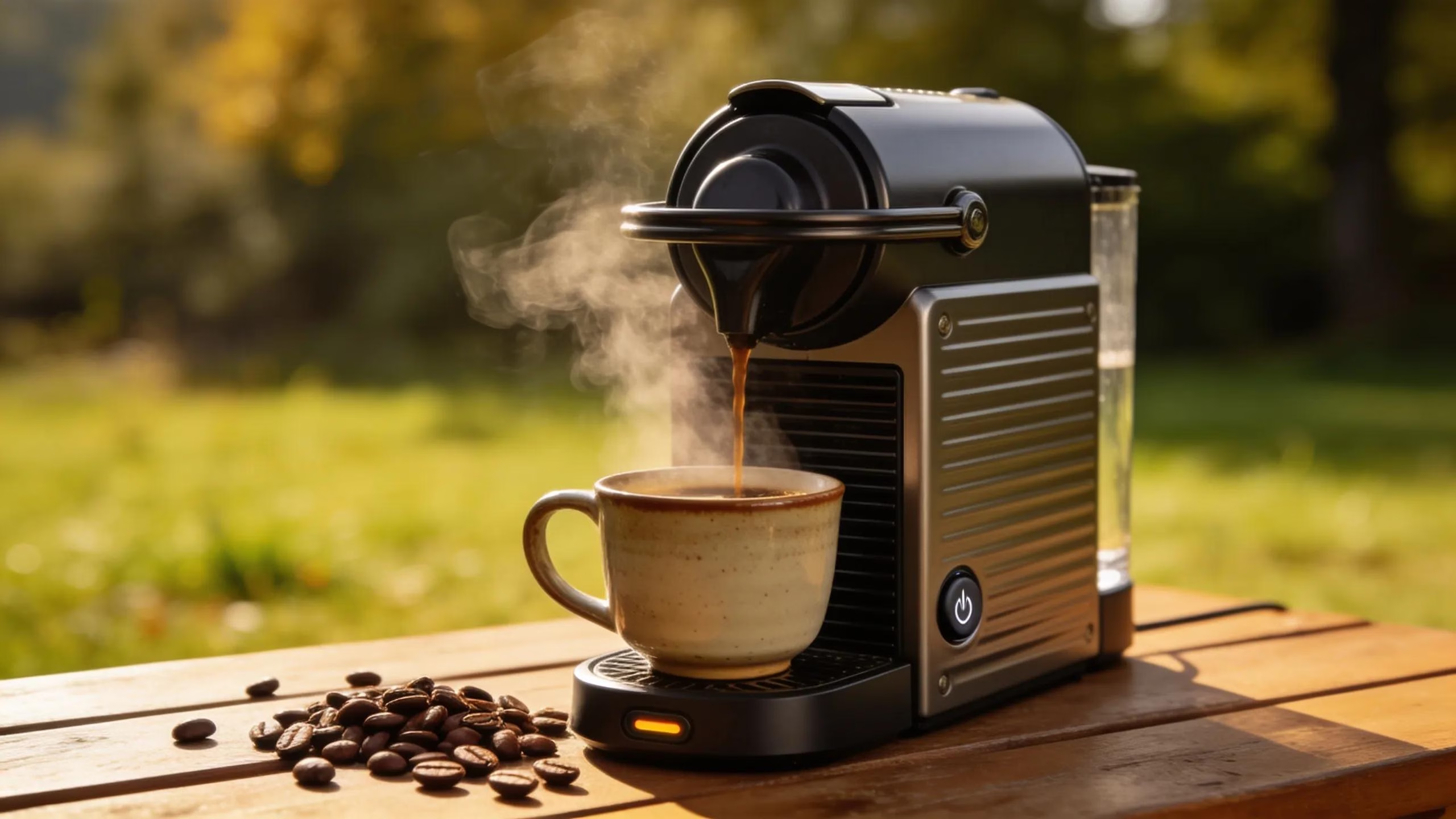
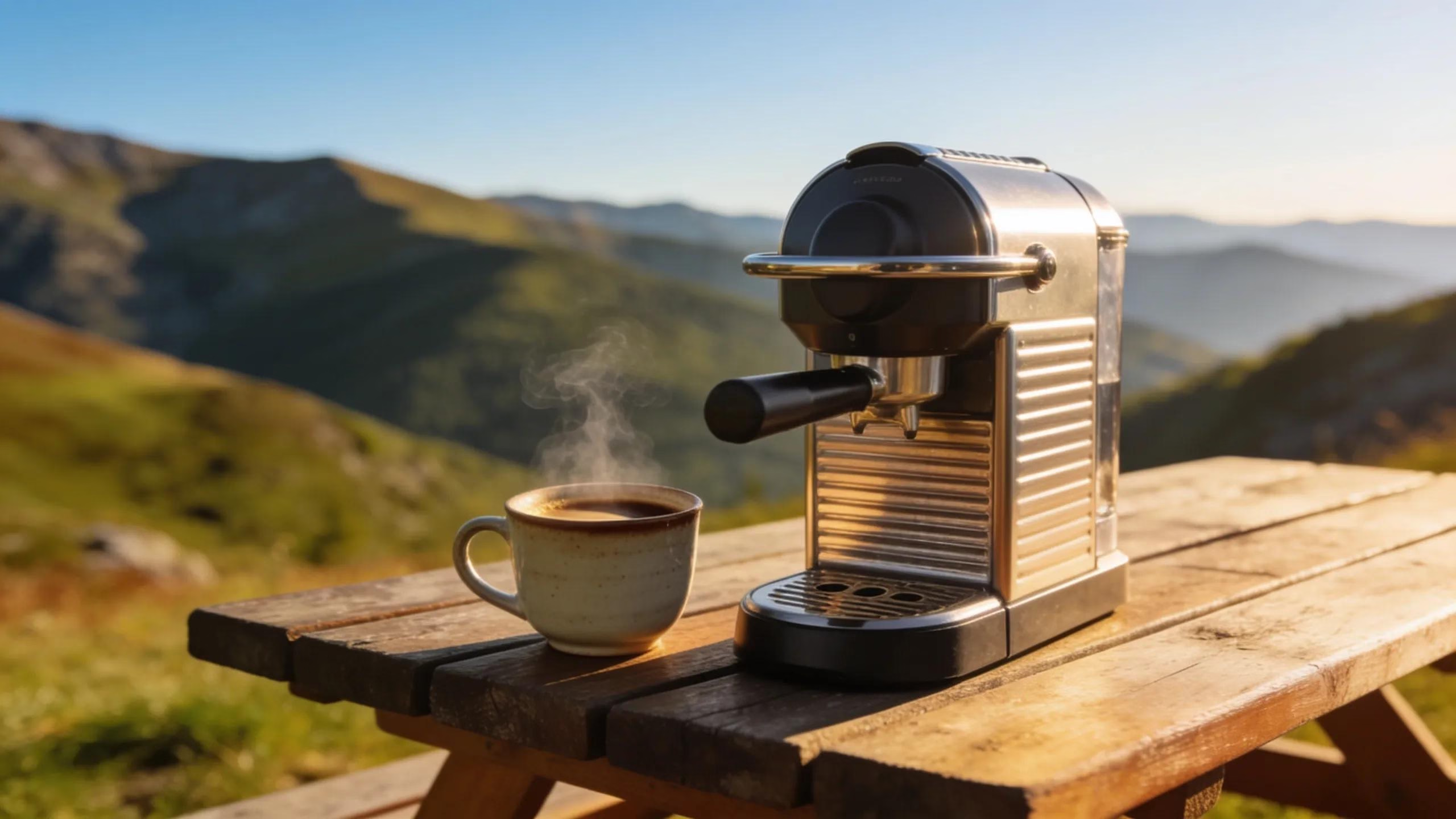
    Self-heating portable espresso machine being used outdoors with coffee cup and beans

    Self-heating models incorporate internal heating elements and sensors to elevate water temperature to 88–96 °C within minutes. Below is a comparison of popular self-heating options:

    Feature

    Outin Nano

    Wacaco Picopresso

    Heating Method

    Electric coil

    None – Manual Lever

    Time to Optimal Temp

    3 minutes

    4 minutes

    Maximum Temp (°C)

    96

    92

    Machines with integrated heating eliminate the need for pre-heated water, translating to fewer accessories and faster brewing cycles in remote environments.

    What Are the Advantages of USB-C Charging and Long Battery Life?

    • Seamless recharging from common adapters and solar panels

    • Up to 10–15 espresso extractions on a single battery pack

    • Fast-charge capability supporting 50% power recovery in 30 minutes

    USB-C charging provides universal compatibility with power banks, laptops, and vehicle adapters, while large-capacity batteries (5,000–10,000 mAh) support multiple shots per charge. These attributes extend brewing autonomy and reduce reliance on dedicated chargers or power bricks.

    Why Are Compact Design and Durable Travel Cases Essential for Portability?
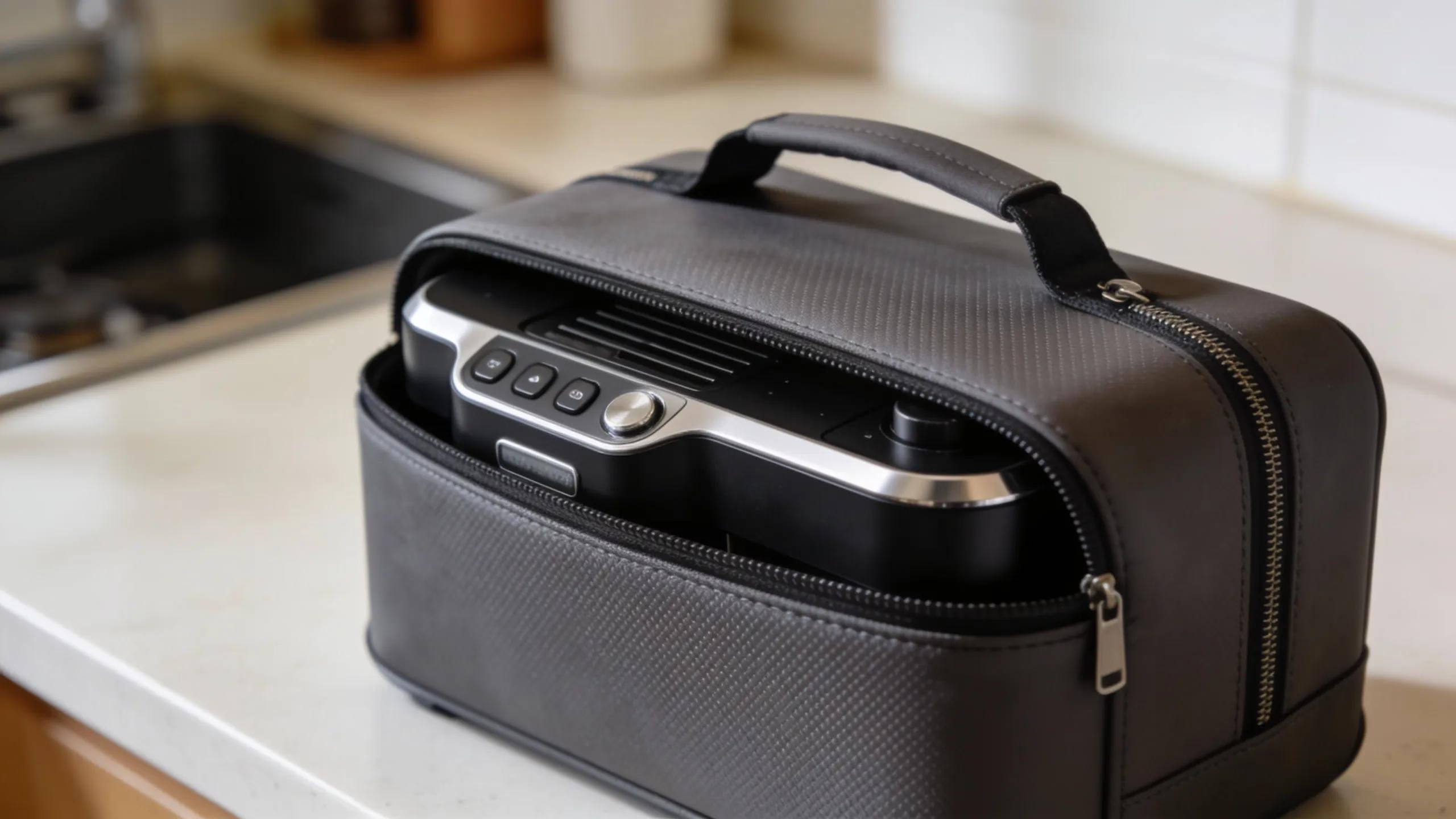
    Compact portable espresso machine in a travel case on a kitchen counter
    • Lightweight construction under 600 g

    • Foldable handles or collapsible levers for minimal footprint

    • Hard-shell travel cases with EVA foam inserts

    Compactness and protective gear prevent damage and simplify storage. Together, these features safeguard internal pumps and electronics against impacts, ensuring your machine remains operational through every adventure.

    How Do Durability and Maintenance Features Impress Users?

    Durability and ease of upkeep underpin long-term satisfaction with portable espresso machines. Using robust materials resists wear from temperature swings and mechanical stress, while simple cleaning routines preserve performance and taste. For example, pairing stainless steel components with quick-release assemblies accelerates maintenance between daily uses.

    What Materials Ensure Robust Construction and Longevity?

    • 304 stainless steel bodies for corrosion and impact resistance

    • BPA-free, food-grade plastics on water channels and reservoirs

    • Anodized aluminum lever systems with reinforced seals

    These elements combine to withstand repeated assembly, high-pressure loads, and travel vibration without compromise.

    How Can Users Easily Clean and Descale Their Portable Espresso Machines?

    Designed for disassembly, many portable machines feature detachable portafilters and water compartments. To maintain peak function:

    1. Rinse removable parts under warm water after each use.

    2. Use biodegradable cleaning tablets monthly to dissolve mineral deposits.

    3. Brush the group head and filter basket with a soft nylon brush to remove grounds.

    Regular cleaning preserves flavor clarity and extends the device’s service life.

    Why Is Warranty and Maintenance Support Important for User Confidence?

    A robust warranty and responsive customer service provide peace of mind when investing in precision equipment. Coverage terms of one to two years, paired with accessible technical support, assure users that any manufacturing defects or performance issues will be resolved swiftly, reinforcing trust and encouraging repeat purchases.

    What Versatility and User Experience Features Add Value to Portable Espresso Machines?

    Versatile input options and accessory integrations allow users to tailor their on-the-go espresso routine. Whether you prefer ground coffee, capsules, or pod systems, having compatibility options and optional frothing attachments enhances enjoyment across contexts.

    Which Coffee Types Are Compatible with Portable Espresso Machines?

    Most portable machines accept:

    • Freshly ground espresso coffee for maximum control, or

    • ESE pods for consistent, mess-free brewing, or

    • Proprietary espresso capsules for single-serve convenience

    This flexibility caters to both craft enthusiasts and travelers seeking rapid simplicity.

    Do Portable Machines Offer Milk Frothing or Integrated Accessories?

    Advanced travel models may include detachable milk frothers, tamper compartments, or dosing scoops. Common integrated tools:

    • Mini handheld frothing wand for latte textures

    • Fold-out tamper stored in the base

    • Compact dosing funnel to reduce grounds spillage

    Having on-board accessories streamlines the preparation workflow without extra gear.

    How Does Noise Level Affect User Experience During Operation?

    Operational sound can range from whisper-quiet pumps at 45 dB to manual lever clicks nearing 60 dB. Lower noise levels enhance comfort in shared spaces like offices or hotel rooms, while louder manual designs often correlate with stronger user feedback on extraction control.

    How to Choose the Best Portable Espresso Machine for Your Needs?

    Selecting the right travel espresso device depends on balancing brewing performance, power autonomy, physical footprint, and feature set. Understanding how each attribute serves your typical environment—be it camping, co-working, or vehicle-based vending—guides you to the optimal model.

    What Features Should You Prioritize Based on Usage Scenarios?

    Different contexts demand different strengths:

    • Camping: Self-heating capability and durable carry case

    • Office: USB-C charging and low operational noise

    • Travel: Compact collapsible designs and quick-assemble portafilters

    Aligning features to scenarios ensures you carry only what you truly need.

    How Do Different Brands Compare on Key Features Like Pressure and Heating?

    Below is a simplified comparison of representative models:

    Brand & Model

    Pressure (bar)

    Heating Type

    Wacaco Picopresso

    18

    none – manual lever

    Outin Nano

    20

    Electric coil

    STARESSO Classic Manual Espresso Maker

    20

    none – manual lever

    Brand-specific engineering determines extraction control and warm-up time, so weigh pump precision against heating speed.

    What Are the Latest Trends and Innovations in Portable Espresso Machines?

    Emerging developments include:

    • USB-C PD fast-charging support for rapid battery replenishment

    • Eco-friendly cleaning tablets with biodegradable formulas

    • Smart temperature control via Bluetooth-enabled apps

    • Modular designs allowing hybrid manual-electric operation

    Staying informed on these trends helps you choose a future-proof device.

    What Are the Most Common User Questions About Portable Espresso Machine Features?

    Users frequently seek clarity on optimal settings, device capabilities, and upkeep best practices. Addressing these queries directly empowers confident decision-making and enhances long-term satisfaction.

    What Is the Ideal Pressure for a Portable Espresso Machine?

    The ideal pressure range falls between 9 and 20 bars, with many compact devices targeting 18 bars to balance extraction speed and crema thickness. Maintaining this range ensures a rich mouthfeel and consistent flavor profile.

    Which Portable Espresso Machines Have Self-Heating Capabilities?

    Several leading models incorporate built-in heating, notably the Outin Nano and Wacaco Picopress, each delivering water to optimal espresso temperatures without external sources, maximizing convenience for remote brewing.

    How Do You Properly Clean and Maintain a Portable Espresso Machine?

    Proper maintenance involves daily rinsing of removable parts, weekly filter brushing, and monthly descaling with food-grade tablets. Easy-release components and clearly marked cleaning cycles help ensure the machine remains hygienic and fully functional.

    How Do Accessories Enhance the Portable Espresso Machine Experience?

    Supplemental gear such as travel cases, grinders, and specialized cleaning products elevates portability and taste consistency. By curating complementary tools, you build a complete on-the-go barista kit that streamlines every brewing step.

    What Travel Cases and Protective Gear Are Recommended?

    Protective options include:

    • Rigid ABS cases with custom foam inserts

    • Water-resistant travel pouches for damp conditions

    • Modular storage organizers for tamper and portafilter

    These solutions guard components from impact and moisture while keeping everything neatly stowed.

    How Do Portable Grinders Complement Espresso Machines?

    Compact manual and electric grinders deliver fresh, uniform grounds essential for optimal extraction. Pairing a grinder that produces consistent particle sizes enhances crema production and flavor clarity in your portable shots.

    Which Cleaning Tablets and Maintenance Products Are Best for Portable Machines?

    Biodegradable, acid-based cleaning tablets designed for pressurized systems dissolve mineral buildup swiftly without harming seals or plastics. Pair these with food-grade lubricant sprays for pump maintenance and ensure each component operates smoothly over time.

    Espresso aficionados and professionals alike rely on 1st-line.com’s expert curation and support to select, maintain, and enjoy portable espresso machines and grinders that consistently impress—wherever the day takes them. By understanding the critical features and leveraging complementary accessories, you’ll craft exceptional coffee with confidence both today and on every adventure ahead.
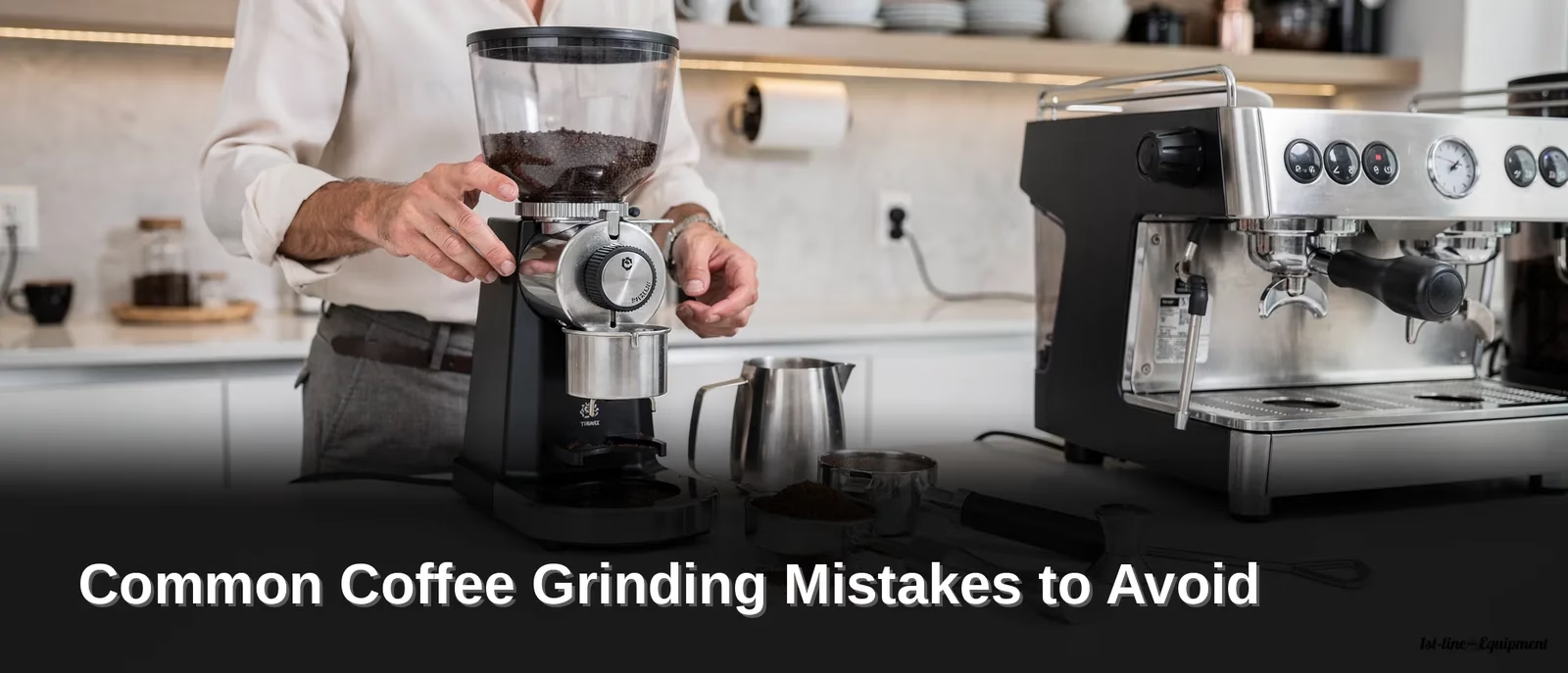
  • Common Coffee Grinding Mistakes to Avoid

    Common Coffee Grinding Mistakes to Avoid

    Grind inconsistency ranks among the top errors home brewers make with drip, pour-over, and French press coffee. Uneven particle sizes cause over-extraction and bitterness in some grounds while under-extracting others, muddying flavor. Matching grind coarseness to brew method, medium for drip, coarse for French press, and using fresh, properly stored beans corrects most extraction problems immediately.

    Key Takeaways

    • Grinding coffee represents a crucial extraction stage that professionals often underestimate in the brewing process.

    • Coarse and fine grinds serve different applications based on contact time with water during brewing.

    • Poor grinding ruins even the finest espresso machines and premium coffee blends consistently.

    • The 5 most common grinding mistakes are fixable habits that improve home coffee quality immediately.

    Why Does Grinding Ruin Great Coffee Beans?

    Extraction depends on grind consistency more than most home brewers realize. Coffee professionals with years of experience still underestimate this stage, treating it as an afterthought rather than the foundation of flavor. A premium bean blend loses its character fast when the grind falls short. Even a top-tier espresso setup may struggle to rescue a cup ruined at the grinder. For drip, pour-over, and French press drinkers, the stakes are just as high as they are for espresso.

    Common grinding mistakes show up in several forms:

    • Grinding beans too far ahead of brew time, letting aroma escape

    • Using a blade grinder that chops unevenly instead of a burr coffee grinder

    • Ignoring particle consistency, which produces both over- and under-extracted grounds in the same batch

    • Skipping regular cleaning, allowing stale oils to taint fresh grounds

    Can a bad grind really ruin a good cup of coffee?

    Yes. Uneven particles extract at different rates, pulling bitterness from fine dust while leaving larger fragments under-extracted and sour. The result is a muddled cup regardless of bean quality or brewing method used for regular coffee.

    Does the type of Coffee Maker matter if the grind is off?

    Not much. A drip Coffee Maker, pour-over cone, or French press press can only work with what the grind provides. Mismatched particle size overwhelms the brewing method’s design, producing apartment or harsh results no matter how advanced the equipment is.

    1st-line Equipment addresses this weak link directly. The company tests and curates espresso coffee grinders for the specialty coffee trade. Supplies cleaning agents, cleaning tools, and water treatment solutions that keep grind performance consistent over time.

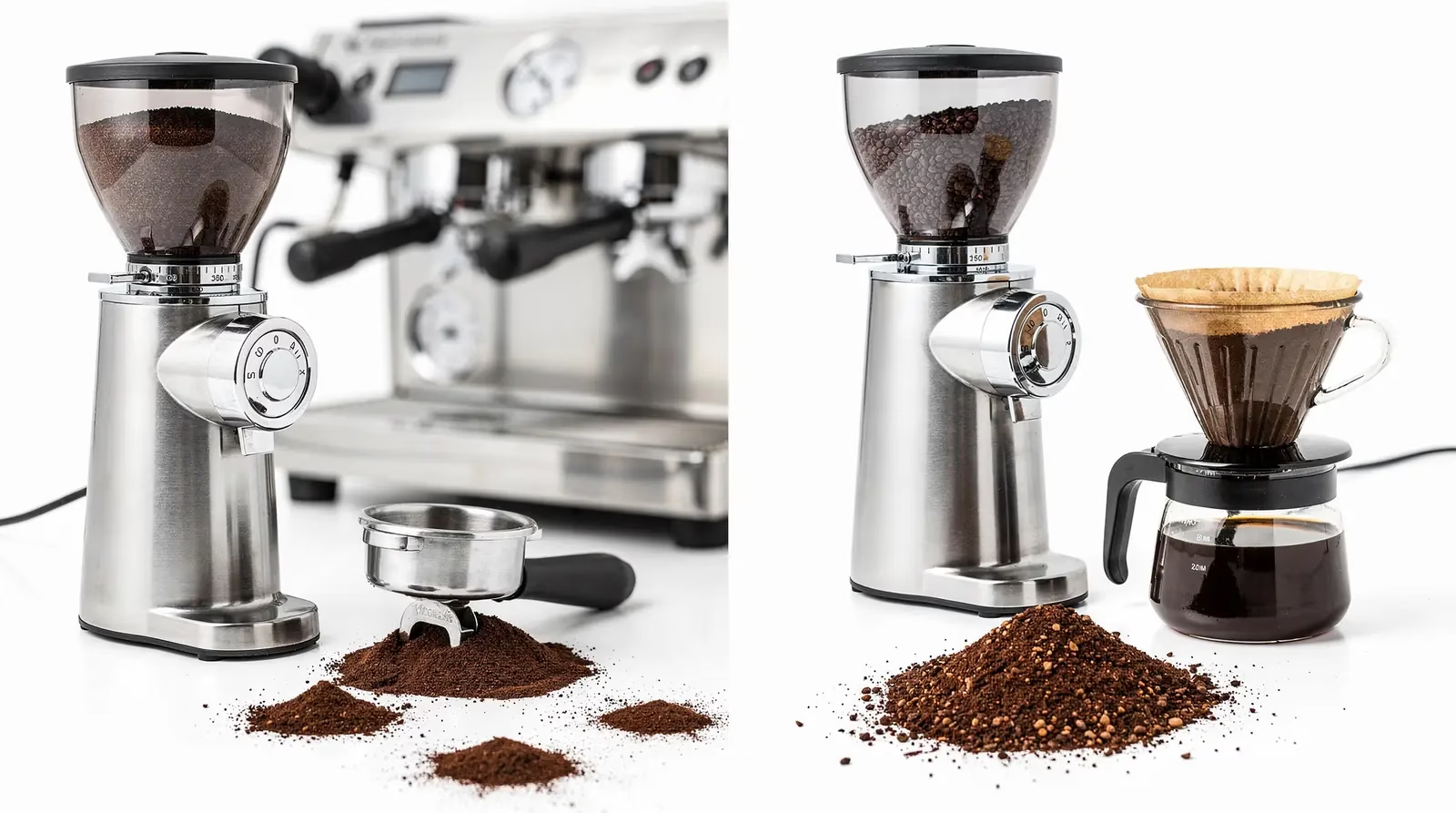
    Finer grinds suit espresso's quick brew time while medium grinds suit drip brewing.; The coarseness

    Is Your Grind Size Right for Brewing?

    Grind size determines extraction speed, and extraction speed determines flavor. Espresso demands a fine, powdery texture because water passes through in under 30 seconds. Drip and pour-over methods need a coarser, sand-like texture because contact time stretches to several minutes. Mismatched settings rank among the most common grinding mistakes home brewers make. The fix starts with matching grind coarseness to brew method rather than guessing.

    Coarseness controls surface area. More surface area means faster extraction; less surface area slows it down. A coffee grinder set too fine for a French press produces over-extracted, bitter sludge. Set too coarse for espresso, the same grinder yields a thin, sour shot with little crema.

    Brew Method

    Grind Texture

    Typical Contact Time

    Espresso

    Fine, powdery

    20-30 seconds

    Drip / Auto Coffee Maker

    Medium

    4-6 minutes

    Pour-over

    Medium-fine

    2-4 minutes

    French press

    Coarse

    4 minutes

    What grind size works best for regular coffee at home?

    Standard drip brewing and pour-over both call for a medium grind, roughly the texture of coarse sand. This range lets water flow evenly through the grounds without channeling or stalling. Home brewers making regular coffee daily benefit from consistency more than extreme fineness or coarseness.

    Selecting the right equipment matters as much as dialing in the setting. 1st-line Equipment offers espresso machines across several categories, including dual boiler, heat exchange, manual/lever, single boiler, thermoblock, super automatic, and commercial grade models, each engineered around a specific grind range. Home brewers who want to verify consistency can also turn to dosing tools and weighing scales, which help confirm that grind output stays uniform shot after shot, cup after cup.

    A common home mistake is storing beans in a way that exposes them to oxygen

    Are You Storing Beans and Grounds Correctly?

    Improper storage ranks among the most damaging grinding mistakes a home coffee drinker can make. Exposure to oxygen, light, and moisture breaks down flavor and aroma within days, sometimes hours, of opening a bag. Beans purchased at real cost deserve better treatment than a shelf next to the stove or a clear container on the counter.

    Freshness loss happens quietly. A bag left open near a sunny window loses aromatic compounds long before mold or spoilage becomes visible. By the time bitterness or flatness shows up in the cup, the damage is already done.

    What is the best way to store coffee beans at home?

    Airtight, opaque containers kept in a cool, dark cabinet preserve flavor far longer than clear jars or original bags. Refrigeration and freezing introduce moisture problems and are best avoided for beans meant to be used within a few weeks. Freezing beans negatively affects the molecular structure of the beans. Buying smaller quantities more often protects against the slow decline that affects large bags sitting half-used for months.

    Does grind size affect how fast coffee grounds go stale?

    Ground regular coffee loses freshness faster than whole beans because more surface area is exposed to air. Grinding only what a Coffee Maker needs for each brew session limits that exposure and keeps flavor closer to peak.

    Better storage habits include coffee storage containers and trays designed to shield beans and grounds from air and light. 1st-line Equipment carries roasted beans and E.S.E. coffee pods, giving home brewers fresher supply options and shorter windows between roast date and cup. Pairing a reliable coffee grinder with proper storage protects the investment already made in quality beans.

    The grinder itself is the tool that can make or break the entire coffee-making process

    Does Your Coffee Grinder Need an Upgrade?

    A worn or inconsistent coffee grinder undermines flavor long before water touches the grounds. The grinder is the single tool capable of making or ruining an entire cup, regardless of how good the beans or the Coffee Maker happen to be. Home brewers chasing better drip, pour-over, or French press results often overlook this step entirely.

    Uneven particle size is the root of most grinding mistakes. Grounds that vary in size extract at different rates, producing a cup that tastes bitter in one sip and sour in the next. That inconsistency stays hidden until the grinder gets replaced, and the difference in the cup is immediate.

    How Do I Know My Grinder Is Holding Back My Coffee?

    Several warning signs point to an overdue upgrade:

    • Grounds look uneven, with a mix of fine dust and larger chunks

    • Extraction feels harder to control across different brew methods

    • Flavor swings between bitter and weak, even with the same beans

    • The grinder struggles to hold a consistent setting over time

    A machine showing two or more of these signs is no longer serving regular coffee drinkers well.

    1st-line Equipment tests and curates espresso coffee grinders for the specialty coffee business, giving buyers a vetted starting point instead of guesswork. That curation matters most for home brewers who lack the time to compare dozens of models on their own.

    Where Can I Find a Better Grinder Without Overpaying?

    Budget concerns keep many home brewers stuck with underperforming equipment. 1st-line Equipment offers deals on sales, clearance and overstock items, refurbished equipment, and sidewalk sales, making an upgrade more attainable. Shoppers who prefer hands-on evaluation can visit the company’s Freehold, New Jersey location by appointment before committing to a purchase.

    What Habits Fix Coffee Grinding Mistakes for Good?

    Consistent habits, not luck, correct grinding mistakes for home brewers. Three routines separate a dialed-in cup from a disappointing one: measuring by weight, cleaning the grinder on a schedule, and matching grind size to the brew method.

    Home baristas brewing drip, pour-over, or French press often blame the beans when habit is the real culprit. Grinding remains a crucial, frequently underestimated stage of extraction. Even professionals with years of industry experience still get it wrong. Fixing this starts with the right tools.

    A reliable coffee grinder only performs consistently when paired with accurate measurement. 1st-line Equipment sells dosing tools and weighing scales built to help brewers measure and repeat correct grind amounts every time. Guesswork disappears once a scale enters the daily routine.

    Cleanliness matters just as much. Stale oils and trapped grounds inside a grinder taint every batch of regular coffee that follows. 1st-line Equipment offers cleaning agents, cleaning tools, and water treatment solutions designed to keep grinders performing at a consistent standard over time.

    Does a better Coffee Maker fix bad grinding habits?

    No. A high-quality Coffee Maker cannot compensate for inconsistent grind size or a dirty burr set. Extraction quality depends on grinding habits first and brewing equipment second.

    Is upgrading equipment worth it for casual home brewers?

    Often, yes, without overspending. 1st-line Equipment offers deals through sales, clearance and overstock listings, refurbished equipment, and sidewalk sales. These options give budget-conscious brewers access to better tools while they build improved grinding habits.

    Mastering proper grinding technique represents a foundational investment in espresso quality and equipment longevity. By addressing common errors—inconsistent particle size, improper dosing, inadequate maintenance, and grinder selection mismatches—operators establish the technical discipline necessary for reproducible results. The relationship between grinder performance and extraction precision remains non-negotiable. Precision grinding directly determines whether your espresso machine delivers its intended potential. Prioritize grinder maintenance and calibration as essential practices, not optional refinements, to sustain both beverage quality and equipment reliability over time.

    FAQ

    What causes the most common grinding mistakes at home?

    Grinding beans too early, using a blade grinder instead of a burr grinder, ignoring particle consistency, and skipping regular cleaning top the list. These habits produce uneven extraction and stale-tasting grounds.

    How does grind size affect drip versus espresso coffee?

    Espresso needs a fine, powdery grind since water contacts it for only 20-30 seconds. Drip coffee needs a medium grind for a 4-6 minute brew time. Mismatched coarseness causes bitter or sour, thin results.

    How does 1st-line Equipment help fix grinding problems?

    1st-line Equipment tests and curates espresso coffee grinders for the specialty coffee trade and supplies cleaning agents, cleaning tools, and water treatment solutions that keep grind performance consistent over time.

    Facts

    • 1st-line Equipment, LLC is located in Freehold, NJ, US.

    • 1st-line Equipment, LLC sells espresso machines, including dual boiler, heat exchange, manual/lever, single boiler, thermoblock, super automatic, and commercial grade types.

    • 1st-line Equipment, LLC provides maintenance products like cleaning agents, cleaning tools, and water treatment solutions.

    • 1st-line Equipment, LLC offers support services including online technical support, repair services, and reference diagrams to customers who purchased equipment through 1st-line.

    • 1st-line Equipment, LLC sells accessories such as bases/knockboxes, coffee filters, coffee storage/trays, cups/shot glasses, dosing tools, latte art tools, milk pitchers, scoops/spoons, signage, syrup bottle pumps/racks, tampers/stations, and weighing scales.

    • 1st-line Equipment, LLC sells coffee products, including roasted beans and E.S.E. coffee pods.

    • 1st-line Equipment, LLC offers deals on sales, clearance/overstock items, refurbished equipment, and sidewalk sales.

  • Why You Need to Adjust Your Grind Size for Optimal Coffee Flavor and Brewing Outcomes

    Achieving the perfect cup of coffee is a complex dance of variables, one of which is often overlooked: grind size. The grind size directly influences extraction, flavor, and the overall brewing experience. Understanding the importance of adjusting grind size can transform a mediocre brew into an exceptional one, allowing each coffee drinker to appreciate the nuanced profiles of their favorite beans. In this article, we will explore how various factors, including roast level, coffee blend types, brewing methods, and environmental conditions, affect grind size. By the end, you will have a comprehensive guide to ensure your coffee consistently reaches its fullest potential.

    How Does Coffee Roast Level Influence the Ideal Grind Size?

    The roast level of coffee significantly dictates the appropriate grind size. Different roast levels—light, medium, and dark—each have unique characteristics that influence how they should be ground. For instance, lighter roasts typically benefit from a finer grind to facilitate optimal extraction, while darker roasts may require a coarser grind to prevent over-extraction and bitterness. Understanding these adjustments is crucial for achieving a balanced flavor profile.

    What Grind Adjustments are Needed for Light, Medium, and Dark Roasts?

    For light roasts, a finer grind is often recommended to allow for the greater acidity and delicate flavors to shine through. Medium roasts can range from medium to fine, providing a balance that suits a variety of brewing methods. On the other hand, dark roasts generally require a coarser grind to manage the intensified bitterness that can arise from extraction at this level. Each adjustment plays a vital role in bringing forth the intended flavors, emphasizing the importance of grind size in the brewing process.

    How Does Roast Profile Affect Extraction and Flavor with Different Grind Sizes?

    The roast profile influences extraction rates and flavor nuances based on how the coffee is ground. For example, light roasts can yield fruity and floral notes when ground fine, promoting swift extraction. Conversely, if these roasts are ground too coarsely, desirable notes may be lost. Understanding your roast profile allows for optimal grind adjustments, maximizing flavor and achieving a balanced cup that delights the palate.

    Why Adjust Grind Size Based on Different Coffee Blend Types?

    Coffee blends consist of various beans, each contributing unique characteristics. Therefore, adjusting the grind size according to blend composition is crucial for optimal extraction. Each blend may require a different grind size to highlight its best flavors and aromas.

    How Do Blend Compositions Impact Grind Size Settings for Optimal Extraction?

    Blend compositions impact grind size settings significantly. A blend that includes a high proportion of robust coffee may require a coarser grind to avoid overwhelming bitterness, while a blend with more delicate Arabica beans might demand a finer grind to adequately extract the subtler flavors. Tailoring the grind size to match the specific blend can help achieve a more refined taste and an enjoyable drinking experience.

    What Are Best Practices for Adjusting Grind Size When Switching Between Single-Origin and Blends?

    When transitioning between single-origin coffees and blends, it’s essential to recalibrate your grinder to reflect the coffee’s unique characteristics. Best practices include starting with a grind size suitable for the blend and adjusting in small increments to taste. This method will help identify the right balance that brings out the best in both single-origin and blended coffees, ensuring every cup maintains its integrity.

    How Do Brewing Methods Dictate Required Grind Size Adjustments?

    Each brewing method possesses its unique requirements for grind size. Different techniques, such as espresso, drip, and cold brew, necessitate specific grind adjustments to produce optimal results.

    What Grind Sizes Work Best for Espresso, Drip, and Cold Brew Techniques?

    Espresso typically requires a fine grind to facilitate rapid extraction under high pressure, whereas drip coffee makers generally favor a medium grind for balanced flavor. In contrast, cold brew utilizes a coarse grind to allow for extended brewing times without bitter extraction. Recognizing the optimal grind size for each method significantly enhances the final brew quality.

    How Does Grind Size Affect Brew Time and Flavor Across Different Devices?

    Grind size not only influences the extraction rate but also the brew time and flavor profile. Finer grinds lead to quicker extraction, making them ideal for methods with shorter brew times, such as espresso. Conversely, coarser grinds are suited for longer brewing periods, allowing nuanced flavors to develop without overpowering bitterness. This understanding aids in crafting the perfect cup tailored to your brewing device.

    What Seasonal and Environmental Factors Require Coffee Grind Size Adjustments?

    Environmental factors such as temperature and humidity can impact coffee’s moisture content, thus affecting grind size. Changes in seasonality can alter these conditions, necessitating adjustments to your grind size for optimal flavor extraction.

    How Do Humidity and Temperature Influence Coffee Grind Size Changes?

    High humidity can cause coffee beans to absorb moisture, making them softer and more prone to over-extraction if ground too fine. Conversely, in drier conditions, beans become more brittle, which may require a coarser grind. Adjusting the grind size based on humidity and temperature helps maintain consistency in flavor regardless of environmental changes.

    When and How Often Should You Adjust Grind Size Seasonally?

    It’s advisable to monitor and adjust grind size with changing seasons, particularly when transitioning between humidity extremes. A general rule is to evaluate grind size adjustments whenever brewing conditions change significantly, such as with new beans or season shifts. Regularly adjusting your grind size ensures a consistently high-quality brew throughout the year.

    What Are the Effects of Grind Size on Coffee Flavor and Extraction Quality?

    Grind size has a profound influence on both the flavor and extraction quality of coffee. Different grind sizes interact with water in various ways, leading to distinct taste sensations.

    Why Does Finer or Coarser Grind Alter Taste Profiles?

    Finer grinds increase the surface area exposed to water, which can result in faster extraction and a more robust flavor, but may also bring forward undesirable bitterness if over-extracted. Coarser grinds, on the other hand, allow for a smoother extraction, highlighting more subtle flavor notes. Balancing these sizes according to brewing method and coffee type is essential for refining taste profiles.

    How Does Consistency in Grind Size Improve Brewing Results?

    Consistency in grind size is paramount for reproducible brewing results. Uniform grind particles support even extraction, preventing some areas of the coffee bed from being over-extracted while others are under-extracted. Implementing precise grinding practices contributes to a harmonious flavor outcome that coffee enthusiasts will appreciate.

    What Are Best Practices for Adjusting Your Grind Size for Coffee Brewing?

    Adjusting grind size effectively can be simple with the right practices in place. Here are some guidelines to ensure optimal results every time.

    What Steps Should You Follow to Adjust Grind Size Correctly?

    1. Understand Your Beans: Determine the roast and blend types to select an appropriate grind size.

    2. Calibrate Your Grinder: Make initial adjustments based on brewing methods and taste preferences.

    3. Taste Test: Continuously taste the coffee to find the equilibrium point for your grind adjustments.

    These steps provide a framework for honing your grinding practices to achieve a perfect brew consistently.

    What Tools and Visual Aids Help Optimize Grind Size Calibration?

    Utilizing visual aids and the right tools can aid in achieving optimal grind size. Features such as grind size charts and dosing tools can assist in turning technical adjustments into more manageable tasks. Products that display grind size settings and provide tactile feedback can enhance the grinding process and improve your knowledge base.

    Through understanding these best practices, coffee lovers can truly appreciate the richness in flavors that precise grind adjustments offer, enhancing their overall coffee experience.

  • VBM Espresso Machine Design Features Explained: Comprehensive Overview of Commercial Espresso Machine Components and Maintenance

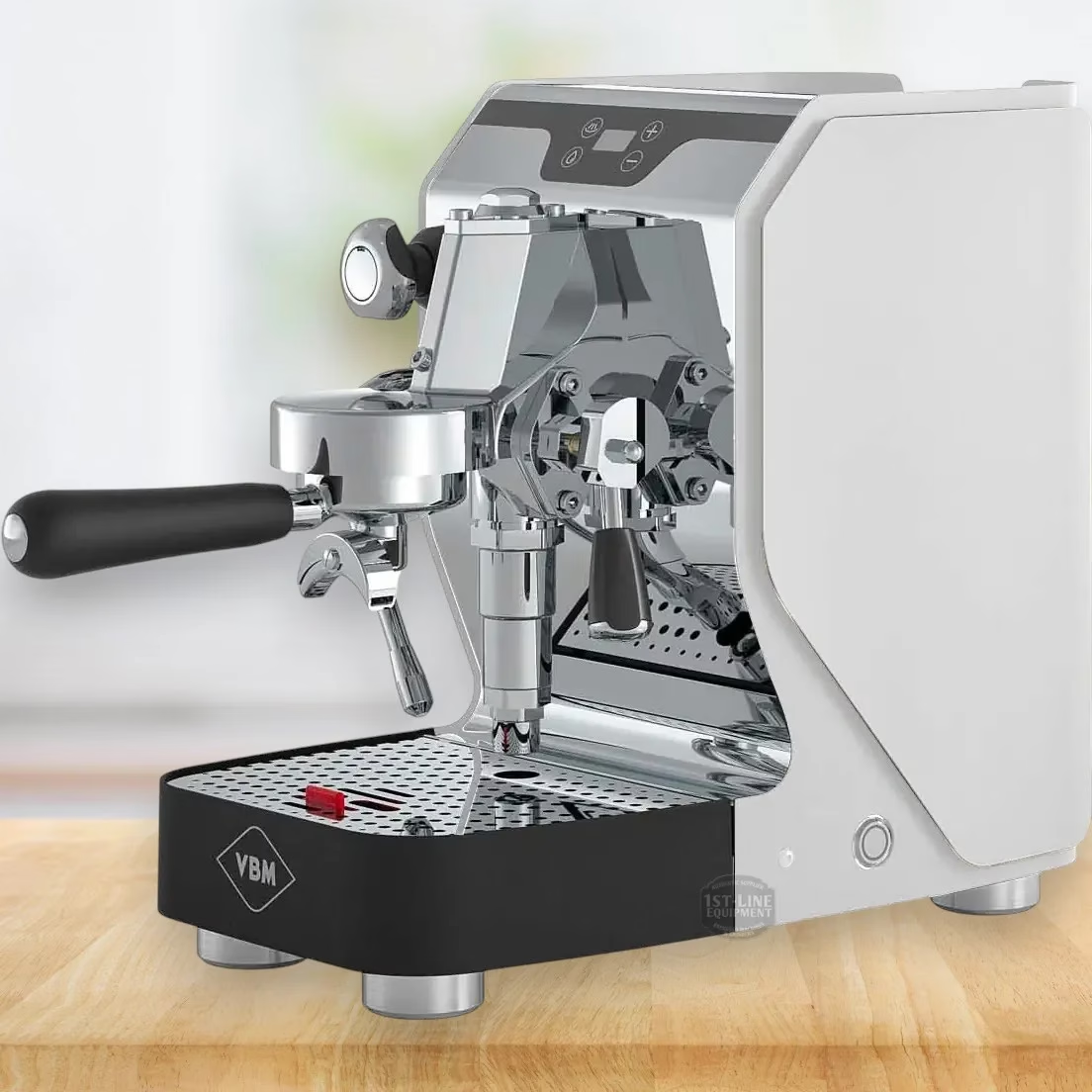
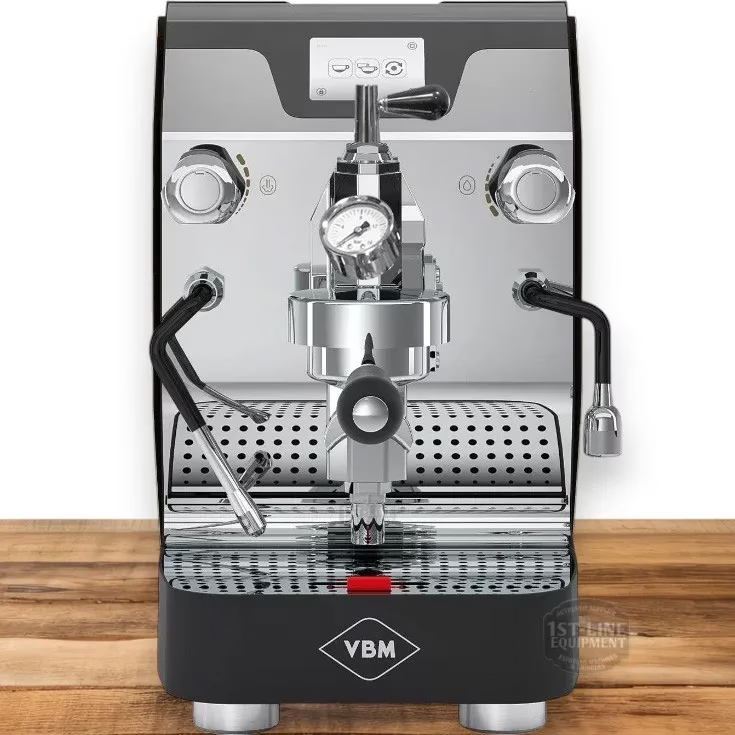
    VBM Espresso Machine Design Features Explained: Comprehensive Overview of Commercial Espresso Machine Components and Maintenance

    VBM espresso machines pair engineered hardware with defined service protocols for professional use. This article summarizes core components, operational characteristics, and preventive maintenance practices that affect reliability and beverage quality.

    Design Features

    VBM designs emphasize thermal stability, throughput, and serviceability. Common options include heat-exchanger or dual-boiler architectures, electronic temperature control for repeatable extraction, and programmable volumetrics for consistent shot yield.

    For procurement and spare parts, 1st-line Equipment LLC supplies VBM models and components to support consistent extraction and operational uptime.

    Key Components

    Primary assemblies determine extraction control and steam performance; understanding them helps prioritize maintenance.

    • Group Head : Delivers even water distribution across the puck for consistent extraction.

    • Valves and Sensors : Regulate flow and pressure to maintain brewing conditions.

    • Steam Wand : Produces steam and controls entrainment for milk texturing.

    The table below summarizes each component’s function and routine maintenance requirements:

    Component

    Function

    Maintenance

    Group Head

    Ensures even water distribution for brewing

    Regular cleaning required; Rinsing and backflushing

    Valves

    Control water flow and pressure

    Periodic inspection needed

    Steam Wand

    Froths milk for beverages

    Clean after each use

    Maintained as a system, these assemblies support repeatable extraction and reliable steam delivery; following service schedules reduces failures.

    Essential Maintenance Practices

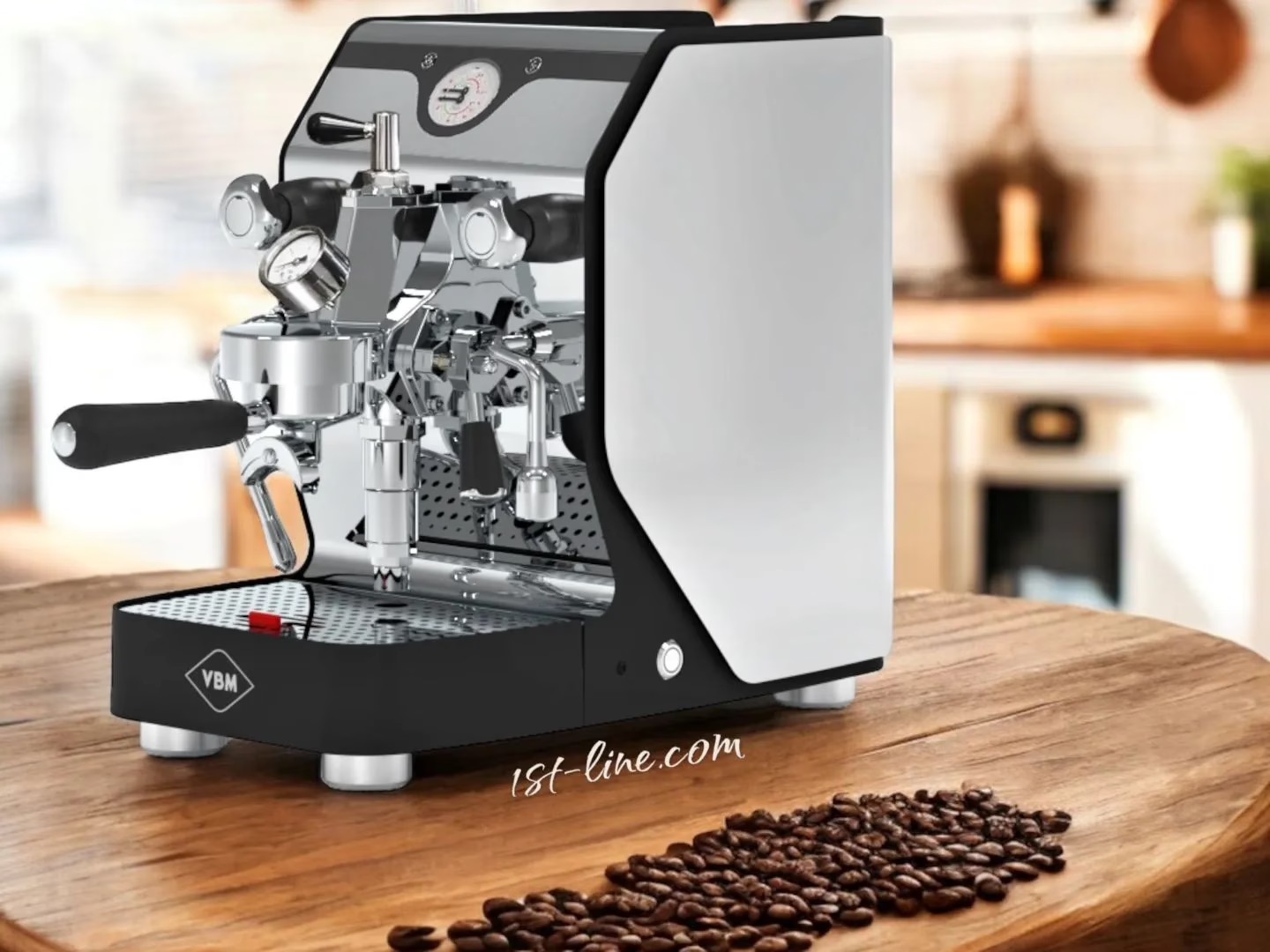
    VBM Super Analogic HX espresso machine on table with coffee beans

    Core routines remove oils and mineral deposits and replace wear items to preserve specifications and beverage quality.

    1. Regular Cleaning : Wipe and backflush group heads; purge steam wands after use.

    2. Descaling : Schedule every 1–12 months based on local water hardness.

    3. Component Replacement : Replace gaskets, screens, and filters on a lifecycle schedule to avoid leaks and performance loss.

    Consistent service reduces incidents, sustains extraction consistency, and extends mean time between failures (MTBF).

    Academic research supports the role of cleaning procedures and machine parameters in espresso quality.

    Espresso Machine Parameters & Cleaning Procedures

    Coffee grind size, dose, and water pressure were evaluated. Machine-cleaning procedures were applied to the different group heads of each machine.

    Correlating espresso quality with coffee-machine parameters by means of association rule mining, D Apiletti, 2020

    Which Maintenance Intervals Maximize Machine Longevity?

    Use a tiered schedule: daily cleaning of brew and steam interfaces; descaling every 1–12 months depending on hardness; inspect or replace gaskets and filters every 6–12 months.

    How Does Accessory Compatibility Facilitate Efficient Upkeep?

    Fit and material compatibility are important. Use manufacturer-approved tools and consumables to minimize service risk and ensure correct tolerances.

    What Are the Key Boiler Technologies in VBM Espresso Machines?

    VBM offers single boiler, heat-exchanger and dual-boiler configurations. Single boilers have a button or switch to get to steam mode; primarily used for espresso only. Heat-exchanger systems support high throughput from a single boiler; dual boilers give independent temperature control for brew and steam.

    Further studies analyze boiler system intricacies and their effects on machine design and functionality.

    Espresso Machine Boiler Systems & Components

    Single- and double-boiler systems and temperature adjustments were investigated. These systems include more components than a single boiler.

    Open Source Espresso Machine for Makers, 2019

    How Does the Heat Exchanger Boiler Enhance Temperature Stability?

    Heat-exchanger designs use thermosiphon flow to keep a hot-water zone while delivering brew water at controlled temperatures, helping preserve stable extraction across shots.

    Precise temperature control is essential to reach target sensory attributes.

    Brewing Temperature & Bar Espresso Machine Design

    Electronic sensing methods were applied to evaluate the effect of brewing temperature on the sensorial properties of espresso coffees (ECs) produced by a bar machine capable of operating with constant, increasing, and decreasing water temperature profiles.

    Application of electronic senses to characterize espresso coffees brewed with different thermal profiles, S Buratti, 2017

    What Are the Advantages of Dual Boiler Systems in Commercial Use?

    Dual boilers allow simultaneous steaming and brewing with independent setpoints, maintaining temperature during sustained peak demand.

    How Do VBM Pressure Systems Optimize Espresso Extraction?

    Integrated regulation and sensors apply target pressure profiles during extraction, which affects solute extraction rates and crema.

    Crema formation and quality are critical indicators of shot preparation, as documented by scientific investigations into its physical and chemical properties.

    Espresso Crema: Quality Marker & Foam Formation Science

    Espresso is traditionally topped by a velvety, reddish-brown foam termed crema, which functions as a quality marker. Despite its significance, espresso foam has received limited detailed scientific examination; only recently have aspects of the underlying physics and chemistry attracted research attention.

    Neglected food bubbles: The espresso coffee foam, 2011

    What Role Does Pressure Profiling Play in Espresso Quality?

    Pressure profiling stages pump pressure across the shot; adjusting phases changes extraction kinetics and lets operators tune sweetness, acidity, and body.

    Which Pump Types Are Utilized in VBM Machines and Why?

    VBM commonly uses rotary vane pumps or gear pumps for steady flow and durability in commercial settings; they deliver consistent pressure for continuous service.

    Comparative research examines pump technologies and context-dependent performance differences.

    Espresso Machine Pumps: Vibrating Armature vs. Rotary Vane

    The study compares rotary vane and vibrating armature pumps and notes context-dependent performance differences.

    Comparative study of the vibrating armature and rotary vane pumps, A Turcanu, 2017

    What Are the Design Characteristics of VBM Group Heads and Steam Wands?

    Group heads and steam wands are engineered for thermal stability and predictable fluid dynamics; material selection and geometry support stable temperatures and steam generation for milk texturing.

    How Does Group Head Engineering Ensure Consistent Temperature?

    Group heads use conductive materials and calibrated mass to reduce temperature transients at the brew interface, supporting repeatable extraction.

    What Features of the Steam Wand Support Microfoam Creation?

    Steam wands combine high output and nozzle geometries (for example tapered tips) to increase steam velocity, control entrainment, and support consistent microfoam.

    Empirical studies evaluate how temperature, milk composition, and steaming technique influence foam quality.

    Espresso Machine Steaming & Microfoam Formation

    This study evaluates microfoam produced from processed dairy milk using the steaming function of an espresso machine as a function of temperature (30–80°C), milk type (pasteurised or UHT), and whey protein content.

    Effect of milk processing and steam frothing conditions on microfoam formation, 2023

    Additional studies explore relationships among milk characteristics, steaming conditions, and microfoam quality.

    Optimizing Espresso Machine Steam Frothing for Microfoam

    This study evaluates microfoam produced from processed dairy milk using the steaming function of an espresso machine across temperatures (30 – 80°C), milk processing type (pasteurised or UHT), and whey protein content. Foam characteristics—stability, viscosity, and bubble-size distribution—varied significantly depending on milk processing and steam heating temperature.

    Effect of milk processing and steam frothing conditions on microfoam formation, 2023

    Frequently Asked Questions

    What are the common signs that my VBM espresso machine needs servicing?

    Inconsistent extraction pressure, unusual noises, long brew times, reduced steam output, or declining espresso quality (weak flavor or poor crema) indicate service is needed—inspect or contact a qualified technician.

    How does the choice of coffee beans affect the performance of VBM espresso machines?

    Freshly roasted beans and the correct grind size are necessary for consistent extraction and crema; stale beans or incorrect grind introduce variability.

    Can I use third-party accessories with my VBM espresso machine?

    Some third-party accessories may fit, but manufacturer-approved tools and consumables are recommended to ensure proper fit, material compatibility, and to protect warranties.

    What is the importance of using high-quality water in VBM espresso machines?

    Water chemistry affects extraction and equipment life; use filtered, softened water with balanced minerals and adjust descaling to local hardness to prevent scale.

    How can I troubleshoot common issues with my VBM espresso machine?

    Start with basic checks: stable power, adequate boiler water level, pump and valve operation, pressure settings, group head cleanliness, and bean freshness. Consult the manufacturer’s guide before repairs.

    What accessories are recommended for enhancing the use of VBM espresso machines?

    Recommended tools include a commercial grinder, calibrated tamper, milk thermometer, and a dedicated cleaning kit to support dosing, temperature control, and hygiene.

    How does the design of VBM espresso machines contribute to energy efficiency?

    Features such as independent heating circuits and effective insulation (notably in dual-boiler machines) reduce standby and recovery losses, lowering energy use.

    What are the key differences between heat-exchanger and dual-boiler systems in VBM espresso machines?

    Heat-exchanger systems use one boiler for high-volume brewing and steaming; dual boilers provide separate temperature control for brew and steam, improving stability under heavy demand.

    How can I improve the longevity of my VBM espresso machine?

    Follow daily cleaning, descaling to match water hardness, and scheduled replacement of gaskets and filters; use quality water and approved accessories.

    What role does pressure profiling play in espresso extraction quality?

    Pressure profiling controls pump pressure over the shot to influence extraction kinetics and balance among sweetness, acidity, and body.

    How does the choice of coffee beans affect the performance of VBM espresso machines?

    See the earlier FAQ: prioritize fresh, properly roasted beans and correct grind size for consistent extraction and crema.

    What are the common signs that my VBM espresso machine needs servicing?

    See the FAQ above for service indicators such as inconsistent pressure, unusual noises, or poor steam and extraction performance.

    Can I use third-party accessories with my VBM espresso machine?

    See above: third-party parts may fit but manufacturer-approved items are recommended to ensure compatibility and avoid warranty issues.

    What is the importance of using high-quality water in VBM espresso machines?

    See the earlier guidance: filtered, balanced, softened water reduces scaling and protects flavor and equipment.

    How can I troubleshoot common issues with my VBM espresso machine?

    Refer to initial troubleshooting advice above and the manufacturer’s guide before attempting repairs.

    What accessories are recommended for enhancing the use of VBM espresso machines?

    See above: commercial grinder, calibrated tamper, thermometer, and cleaning kit are recommended.

    How does the design of VBM espresso machines contribute to energy efficiency?

    See above: independent heating circuits and insulation reduce energy losses.

    What are the benefits of using programmable features in VBM espresso machines?

    Based on different VBM models, programmable controls standardize temperature, shot volume, and pre-infusion timing across operators, improving consistency and throughput.

    How often should I perform maintenance on my VBM espresso machine?

    Daily: clean brew and steam interfaces. Descale every 1–12 months depending on hardness. Inspect gaskets and filters every 6–12 months and replace as needed.

    Conclusion

    Choosing the right boiler architecture and pressure controls, combined with structured preventive maintenance, helps VBM machines deliver consistent extraction and long service life.

    Conclusion

    Regular maintenance, correct water chemistry, and approved consumables preserve performance and reduce operational risk.

    Conclusion

    A structured maintenance routine and appropriate boiler selection ensure VBM espresso machines provide consistent, high-quality beverages with minimal downtime; contact authorized suppliers for model-specific parts and service.

  • Tamper Diameter Size by Espresso Machine Make and Model

    Tamper Diameter Size by Espresso Machine Make and Model

    Espresso Tamper Diameter Guide for Modern Espresso Machine Brands and Models

    Using the correct espresso tamper size is essential for achieving even extraction and consistent espresso quality. While many modern espresso machines use the industry-standard 58mm commercial portafilter, numerous home machines and specialty systems require smaller diameters. Choosing the proper tamper ensures full coffee bed coverage and minimizes channeling.

    This guide provides a reference table of common espresso machine manufacturers and the tamper sizes typically used with their current and recent models.

    Why Tamper Size Matters

    A tamper that is too small leaves gaps around the edge of the basket, resulting in uneven compression and poor extraction. A tamper that is too large may not fit inside the basket at all.

    Modern precision tampers often measure slightly under the nominal basket size—for example, 58.3mm, 58.4mm, or 58.5mm—to maximize puck coverage and improve extraction consistency.

    Espresso Tamper Diameter Chart

    Espresso Machine BrandPopular ModelsBasket SizeRecommended Tamper Diameter
    La MarzoccoLinea Mini, Linea Micra, GS358mm58.4–58.5mm
    Rocket EspressoAppartamento, Mozzafiato, R Nine One, Giotto58mm58.4–58.5mm
    ProfitecGO, Pro 300, Pro 400, Pro 600, Drive58mm58.4–58.5mm
    ECMSynchronika II, Mechanika Max, Classika PID58mm58.4–58.5mm
    LelitBianca V3, Mara X, Elizabeth, Bianca58mm58.4–58.5mm
    RancilioSilvia Pro X, Silvia V658mm58.4–58.5mm
    Nuova SimonelliOscar II, Musica, Appia Life58mm58.4–58.5mm
    Victoria ArduinoEagle One Prima, E1 Prima EXP58mm58.4–58.5mm
    SanremoYOU, Cube, Café Racer58mm58.4–58.5mm
    SlayerSingle Group, Steam LP58mm58.4–58.5mm
    BezzeraBZ13, Duo DE, Matrix58mm58.4–58.5mm
    Quick MillAndreja Premium, Vetrano, Silvano Evo58mm58.4–58.5mm
    AscasoSteel DUO PID, Steel UNO PID, Baby T58mm58.4–58.5mm
    Breville (Sage)Dual Boiler, Oracle, Oracle Touch58mm58.4–58.5mm
    Breville (Sage)Barista Express, Barista Express Impress, Barista Pro, Bambino Plus54mm53.3–53.5mm
    De’LonghiLa Specialista Series51mm51mm
    GaggiaClassic Pro, Classic Evo Pro58mm58.4–58.5mm
    GaggiaCarezza, Gran Prestige53mm53mm
    KitchenAidSemi-Automatic Espresso Collection58mm58.4–58.5mm
    DilettaBello+, Mio, Alto58mm58.4–58.5mm
    LUCCAM58, A53 Mini58mm or 53mmModel dependent
    La SpazialeMini Vivaldi II, Dream T53mm53mm
    SolisPerfetta Plus54mm53.3–53.5mm
    CapressoEC Pro58mm58.4–58.5mm
    Flair EspressoFlair 5858mm58.4–58.5mm
    Flair EspressoClassic, Signature, Pro 2ProprietaryFactory tamper
    CafelatRobot58mmIncluded tamper
    Decent EspressoDE1 Series58mm58.4–58.5mm
    ElektraVerve, KUP, Kappa, Sixties, Belle Epoque, Barlume, Mini Verticale, Modern, Micro Casa Semiautomatica58mm58.4–58.5mm
    ElektraMicro Casa a Leva49mm48.5mm
    JuraAutomatic machinesN/ANo tamper required
    PhilipsLatteGo SeriesN/ANo tamper required
    BoschVero SeriesN/ANo tamper required

    Common Espresso Tamper Sizes

    58.5mm

    The most common precision size for commercial and prosumer espresso machines. Brands including La Marzocco, Rocket Espresso, ECM, Profitec, Lelit, Elektra, Rancilio, Sanremo, Slayer, and Decent Espresso all use 58mm baskets that pair exceptionally well with a 58.5mm precision tamper.

    54mm Systems

    Popular among Breville Barista Express, Barista Pro, Bambino Plus, and Solis machines. Precision tampers measuring 53.3mm to 53.5mm provide the best fit.

    53mm Systems

    Found on La Spaziale machines, select LUCCA models, and some older Gaggia machines.

    51mm Systems

    Common on entry-level De’Longhi machines and compact home espresso systems.

    49mm Systems

    Used by the Elektra Micro Casa a Leva and certain traditional lever espresso machines.

    Precision Tampers vs Standard Tampers

    High-end accessory manufacturers such as Pullman, Normcore, Force Tamper, Saint Anthony Industries, and Bravo produce precision-machined tampers designed to fit modern baskets more closely than standard nominal sizes. Diameters such as 58.3mm, 58.35mm, 58.4mm, and 58.5mm reduce sidewall gaps and promote more uniform extractions.

    Final Thoughts

    Before purchasing a tamper, verify the basket diameter used by your specific espresso machine model. Although 58mm remains the industry standard, manufacturers such as Breville, La Spaziale, De’Longhi, and Elektra offer machines with smaller basket diameters that require dedicated tampers. Matching the tamper diameter to the basket size helps ensure more even extractions, better crema, and consistently excellent espresso.

  • Advantages of Puly Grind Crystals for Espresso Coffee Grinder Cleaning

    Advantages of Puly Grind Crystals for Espresso Coffee Grinder Cleaning

    Advantages of Puly Grind Crystals Over Urnex Grindz for Espresso Grinder Maintenance and Cleaning

    Maintaining the performance of an espresso grinder is crucial for coffee enthusiasts and coffee professionals alike. Among the cleaning agents available, Puly Grind Crystals offer distinct advantages over Urnex Grindz for keeping grinders clean and efficient. These specialized cleaning agents are designed to remove coffee oils and residues that can accumulate over time, ensuring optimal grinder operation. This article explores the advantages of using Puly Grind Crystals compared to Urnex Grindz, focusing on their composition, cleaning mechanisms, ease of use, and overall effectiveness in espresso grinder maintenance.

    What Are Puly Grind Crystals and How Do They Compare to Urnex Grindz?

    Puly Grind Crystals are a specialized cleaning agent formulated specifically for espresso grinders. Like Urnex Grindz, they work by breaking down and removing coffee oils and residues that affect flavor and grinder performance. However, Puly Grind Crystals differ in their composition and cleaning action, offering several benefits that make them a preferred choice for many users.

    Composition and Safety Profile Differences

    Puly Grind Crystals are composed of non-toxic ingredients that are safe for both the user and the environment, with a formulation that is gentle on grinder burrs while effectively targeting coffee residues. Urnex Grindz also offer a safe cleaning option, but Puly Grind emphasizes a formulation that dissolves completely without leaving any residue, reducing the need for additional rinsing. This difference can contribute to ease of use and peace of mind regarding potential impact on grinder components.

    Cleaning Effectiveness and Mechanisms

    Both products utilize a combination of chemical and physical actions to remove coffee buildup. Puly Grind Crystals dissolve into a solution that penetrates and lifts oils and residues effectively. Compared to Urnex Grindz, Puly Grind is recognized for a faster dissolution and thorough cleaning with minimal effort, often working efficiently without the need for grinder disassembly. This can enhance convenience and reduce maintenance time for users.

    Why Choose Puly Grind Crystals Over Urnex Grindz for Regular Maintenance?

    Maintaining a clean espresso grinder is essential to preserving coffee flavor and grinder longevity. While both Puly Grind Crystals and Urnex Grindz serve this purpose well, Puly Grind offers particular advantages that support consistent and effective maintenance.

    Impact on Grinder Performance and Flavor Consistency

    Puly Grind Crystals ensure that grinder burrs remain free from residue that can cause inconsistent grind size and off-flavors. Compared to Urnex Grindz, Puly Grind’s thorough cleaning action helps maintain optimal extraction and flavor clarity by removing oils more completely. Regular use of Puly Grind can thus contribute to a more reliable coffee experience over time.

    Benefits in Routine Maintenance and Component Longevity

    Using Puly Grind Crystals as part of regular grinder care promotes improved grinder performance and extends the life of grinder components. Due to their formulation, these crystals reduce the risk of buildup that can wear down burrs or impair operation. While Urnex Grindz are effective, Puly Grind’s formulation is designed to be gentler and more efficient, potentially increasing the frequency and ease with which users keep their grinders in optimal condition.

    How to Use Puly Grind Crystals: A Convenient Cleaning Method

    Puly Grind Crystals offer an easy and straightforward cleaning process that can be done without disassembling most espresso grinders, which is also possible with Urnex Grindz but often requires more steps.

    Recommended Cleaning Steps With Puly Grind Crystals

    • Prepare the Grinder: Ensure the grinder is empty and unplugged before cleaning.
    • Add Puly Grind Crystals: Measure and add the recommended amount of crystals into the grinder hopper.
    • Operate the Grinder: Turn on the grinder to allow crystals to pass through the burrs, breaking down residues.
    • Clean and Wipe: Empty the grinder and use a grinder brush to sweep left over in chamber.
    • Rinse if Needed: Depending on preference or grinder type, run a small amount of coffee through the grinder to clear residual cleaning agents.

    This simple process contrasts with some users’ experiences with Urnex Grindz, which may require additional rinsing steps or disassembly for optimal cleanliness.

    Additional Comparisons: Environmental and Safety Considerations

    Puly Grind Crystals are crafted from non-toxic ingredients that prioritize user and environmental safety, similar to Urnex Grindz. However, Puly Grind’s faster dissolution rate and residue-free finish may contribute to less chemical runoff and reduced environmental impact. Their gentle yet effective cleaning agents align with sustainable maintenance practices without compromising cleaning power.

    Frequently Asked Questions About Puly Grind Crystals and Their Advantages Over Urnex Grindz

    How often should espresso grinders be cleaned with Puly Grind compared to Urnex Grindz?

    Both products recommend cleaning every 1-2 weeks depending on grinder usage. However, Puly Grind’s effective residue removal often allows users to maintain grinder performance comfortably at this interval, sometimes with less frequent need for deep cleans.

    Are Puly Grind Crystals compatible with all espresso grinders like Urnex Grindz?

    Yes, Puly Grind Crystals are compatible with a wide range of espresso grinders burrs, just as Urnex Grindz are. Their safe, non-toxic formulation ensures broad usability without damage to grinder components.

    Can Puly Grind Crystals be used safely without taking the grinder apart?

    Yes, one of the significant advantages of Puly Grind Crystals is their safe and effective use without disassembling the grinder, making maintenance simpler and quicker in comparison to some uses of Urnex Grindz that may require more extensive cleaning procedures.

  • Affordable Espresso Grinders That Elevate Home Brewing

    Affordable Espresso Grinders That Elevate Home Brewing

    Affordable Espresso Grinders That Elevate Home Brewing: Best Options and User Guidance

    Selecting an appropriate espresso grinder improves home brewing and permits café-quality results at lower cost. Affordable grinders deliver consistent particle size and support multiple brewing methods. This article reviews the best affordable espresso grinders under $100, specifies selection criteria, and provides essential maintenance guidance. It also identifies options suitable for small cafés, addressing both domestic and commercial requirements.

    What Are the Best Affordable Espresso Grinders Under $100?

    Evaluation should include both manual and electric models that provide reliable performance without excessive cost. The following recommendations have received positive user reviews and represent viable options within this price range:

    1. Hario Skerton Pro – This manual grinder is known for its portability and consistent grind size, making it ideal for home use. Priced around $44, it features a durable ceramic burr and an adjustable grind setting.
    2. Baratza Encore – An electric grinder that offers exceptional grind consistency for $99. It is user-friendly and perfect for beginners, with 40 grind settings to suit various brewing methods.
    3. Capresso Infinity – This electric grinder, available for approximately $70, features a stainless steel burr and 16 grind settings, providing versatility for different coffee styles.

    If you want to upgrade your grinder, visit 1st-line Equipment.

    Top Manual Espresso Grinders for Home Use

    Manual grinders suit users who value the process of hand grinding. They provide a controlled brewing experience and are typically more affordable than comparable electric models. The Hario Skerton Pro is notable for its ease of use and portability, and it produces a consistent grind that supports proper espresso extraction.

    Recommended Electric Espresso Grinders Within Budget

    Electric grinders such as the Baratza Encore and Capresso Infinity offer speed and convenience for daily operation. The Baratza Encore is recognized for its grind consistency and straightforward operation. The Capresso Infinity balances features and price. Both models are well reviewed for performance and reliability, making them appropriate choices for home baristas.

    How to Choose an Affordable Espresso Grinder for Home Brewing?

    Selecting the correct grinder requires assessment of several key features. Prioritize adjustable grind settings to accommodate different brewing methods. Prefer burr mechanisms over blade designs for uniform particle size. Also evaluate capacity and ease of cleaning, as these factors influence long-term satisfaction and performance.

    Further research highlights the critical role of grind size optimization in achieving superior coffee quality for both home and professional brewing.

    Optimizing Coffee Grind Size for Home & Professional Brewing Quality

    Pour-over coffee extraction is governed by multiple interdependent variables: roast level, grind size, brew ratio, extraction time, water temperature, and total dissolved solids (TDS). This study examines the optimization of these variables using reinforcement learning (RL) and compares RL performance with three common machine-learning models: K-nearest neighbors (KNN), decision tree, and support vector machine (SVM). The RL agent was configured to balance exploration and exploitation, with the objective of maximizing rewards by adjusting brewing parameters. Data were collected from both professional baristas and homebrewers to train and evaluate the models.

    For those seeking high-quality espresso grinders, 1st-line Equipment, LLC supplies a curated selection of affordable models that balance cost-effectiveness with grind consistency. Their range includes options suitable for both domestic and commercial use.

    What Are Essential Maintenance Tips for Affordable Espresso Grinders?

    Proper maintenance preserves service life and ensures consistent performance. Regular cleaning and appropriate care prevent blockages and uneven grind distribution. The following measures are recommended for routine maintenance:

    1. Routine Cleaning: Clean your grinder regularly to remove coffee oils and residue. Use a soft brush to clean the burrs and a damp cloth for the exterior.
    2. Check for Wear: Inspect the burrs periodically for signs of wear. Replacing worn burrs can significantly improve grind consistency.
    3. Calibration: Occasionally recalibrate your grinder to ensure it produces the desired grind size, especially if you notice changes in your espresso extraction.

    Routine Cleaning Procedures to Ensure Durability

    Establish a cleaning schedule. After each use, brush out residual grounds and wipe the exterior. Every few weeks, disassemble the unit to clean the burrs thoroughly. These procedures improve flavour stability and extend equipment lifespan.

    Troubleshooting Common Grinder Issues

    If issues arise, such as uneven grinds or blockages, inspect the burrs for obstructions and clean them as required. Adjust the grind setting to address extraction inconsistencies. If faults persist, consult the manufacturer’s service and troubleshooting guidance.

    Which Budget Espresso Grinders Are Suitable for Small Cafés?

    Small cafés require durable, efficient grinders to maintain service quality. Budget-friendly models can provide adequate performance while limiting capital expenditure.

    1. Baratza Sette 30 – Priced around $249, this grinder is known for its speed and precision, making it suitable for high-volume settings.
    2. Breville Smart Grinder Pro – Available for approximately $199, it offers a wide range of grind settings and a user-friendly interface, ideal for busy cafés.

    Durability and Performance Considerations for Commercial Use

    For commercial selection, assess build quality, sustained grind consistency, and operational ergonomics. Models that are engineered to meet the demands of a busy café and support consistent espresso quality are available through 1st-line Equipment.

    Accessory Recommendations to Enhance Grinder Functionality

    To optimise grinder performance, consider a dosing scale for precise measurement and a dedicated grinder brush for cleaning. These accessories support consistent dosing and simplify maintenance. You can find a wide range of espresso grinders at various online retailers.

    Frequently Asked Questions

    What features should I look for in an affordable espresso grinder?

    Prioritise adjustable grind settings and a burr mechanism for uniform particle size. Also consider capacity, ease of cleaning, and overall durability. These attributes affect extraction consistency and operational reliability.

    How often should I clean my espresso grinder?

    Clean at least monthly, with frequency increasing under heavier use. After each use, remove residual grounds and wipe the exterior. Perform a comprehensive cleaning, including burr disassembly, regularly to maintain optimal performance and flavour.

    Can I use a manual grinder for espresso?

    Yes. Manual grinders can produce a consistent grind and permit precise control over particle size. Models such as the Hario Skerton Pro are portable and cost-effective. They require more physical effort than electric alternatives but remain suitable for home baristas.

    What is the difference between burr and blade grinders?

    Burr grinders use two abrasive surfaces to reduce beans to a uniform particle size, producing a consistent grind. Blade grinders chop beans with a spinning blade, yielding uneven particle distribution that can impair extraction and flavour. For espresso, burr grinders are generally recommended.

    Are there any budget-friendly options for small cafés?

    Yes. Models such as the Baratza Sette 30 and Breville Smart Grinder Pro offer a balance of performance and durability at moderate cost. These grinders are designed to handle relatively high volume while maintaining grind consistency.

    How can I troubleshoot common issues with my espresso grinder?

    For uneven grinds or clogs, inspect and clean the burrs, then readjust the grind setting. If the issue continues, follow the manufacturer’s troubleshooting procedures. Consistent maintenance reduces the incidence of common faults.

    Conclusion

    An affordable espresso grinder can materially improve home brewing by delivering consistent particle size and enabling optimal extraction without high expenditure. Careful selection and routine maintenance will extend equipment life and preserve coffee quality. Refer to the curated selection of affordable grinders to identify models that meet your brewing and budgetary requirements.

  • How Do You Create High Ratio Espresso Extractions or Espresso Shots

    How Do You Create High Ratio Espresso Extractions or Espresso Shots

    How to Create High Ratio Espresso Extractions: Mastering Brew Ratios and Shot Quality

    High-ratio espresso combines precise technique and basic espresso science. This guide breaks down brew ratios, shot quality, and practical steps you can use to improve your shots. Many home brewers and baristas miss the right balance of flavor and strength; the methods here help you get a richer, more satisfying result. We’ll define high-ratio shots, show how to calculate and tweak ratios, list necessary equipment, and cover common extraction problems.

    Key Takeaways

    • High ratio espresso shots use a larger water-to-coffee ratio, resulting in a more concentrated and flavorful espresso.
    • Brew ratio defines the relationship between coffee grounds and water volume, crucial for controlling espresso taste and strength.
    • Adjusting brew ratios allows baristas to customize espresso flavor profiles from robust to subtle.
    • Calculating brew ratios involves measuring coffee dose and shot volume to achieve the desired espresso concentration.
    • Quality espresso machines with stable temperature and pressure improve consistency in high ratio espresso extractions.
    • Common challenges like over-extraction and under-extraction stem from incorrect grind size or brewing time.
    • Troubleshooting extraction issues requires adjusting grind size and extraction time to balance espresso flavor.
    • Monitoring extraction time between 25 to 30 seconds helps optimize sensory qualities like aroma, flavor, and body.

    What Is a High Ratio Espresso Shot and Why Does It Matter?

    A high-ratio espresso shot is defined by the weight or volume of coffee relative to the water used, which produces a distinct concentration and flavor profile. The brew ratio directly shapes extraction yield, aroma, and perceived strength. For anyone refining espresso technique, controlling the ratio is a primary tool to influence taste and balance.

    Defining Brew Ratio and Its Role in Espresso Extraction

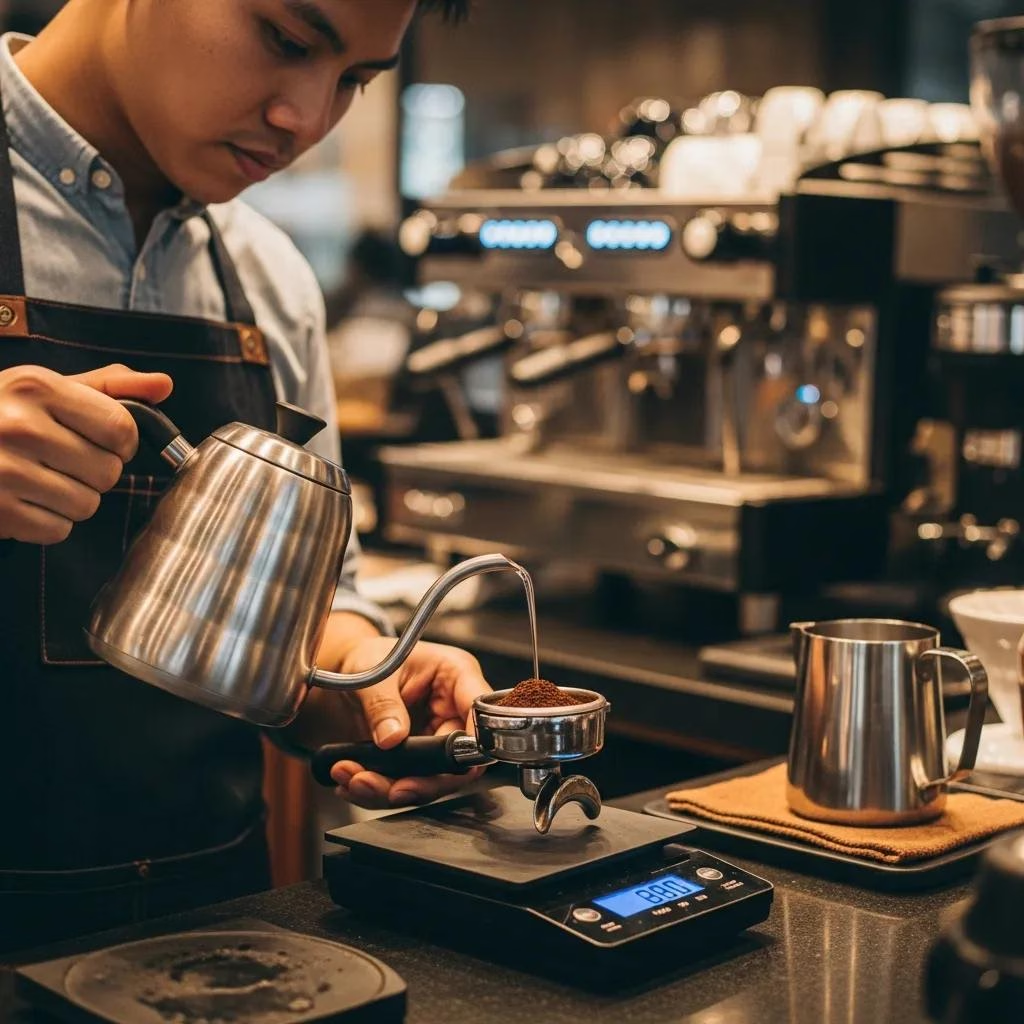
    Barista measuring coffee and water for brew ratio, highlighting the importance of precision in espresso extraction

    Brew ratio is the relationship between the weight of coffee grounds and the water used. For espresso, a common ratio is 1:2 — one part coffee to two parts water. That ratio affects how compounds dissolve and how flavors are extracted from the grounds. Higher ratios tend to increase intensity; lower ratios produce a milder cup. Test different ratios to find what suits a given bean and taste.

    Research reinforces that the coffee-to-water ratio strongly influences the sensory quality of espresso.

    Mastering Espresso Brew Ratios for Quality

    The final quality of espresso coffee depends on both the selection of ground roasted coffee and the technical conditions of the extraction, specifically the coffee/water ratio on the physico-chemical and sensory quality of espresso coffee.

    Influence of coffee/water ratio on the final quality of espresso coffee, 2007

    How Brew Ratio Influences Espresso Taste and Strength

    The brew ratio changes both strength and taste. A higher ratio adds body and richness; a lower ratio gives a lighter, more delicate cup. For example, 1:1.5 often yields a robust, full-bodied espresso, while 1:3 produces a subtler, more nuanced shot. Use these patterns to match ratio with bean character and personal preference.

    How to Calculate and Adjust Brew Ratios for High Ratio Espresso Shots

    Calculating and adjusting brew ratios is straightforward. Decide your coffee dose and the desired shot volume. If you pull 30 ml from 10 g of coffee, the ratio is 1:3. Changing either the dose or the shot volume will shift the ratio and the resulting flavor.

    If your espresso tastes too bitter, try reducing the coffee dose or increasing the shot volume to lower concentration. If the shot seems weak, increase the dose or reduce the shot volume to intensify flavor. These simple adjustments give you direct control over balance.

    Scientific studies continue to test variables that help optimize espresso extraction.

    Optimizing Espresso Extraction Variables

    This study aims at scientifically optimizing the espresso coffee extraction, conducting experimental studies with espresso coffee supplementary tools to understand the effect of different variables on espresso coffee extraction.

    Advanced experimental and analytical study for the optimization of the Espresso Coffee extraction., G Khamitova, 2020

    Which Equipment and Settings Optimize High Ratio Espresso Extractions?

    Right equipment and stable settings are essential. Use an espresso machine that holds temperature and pressure steady, a grinder that produces consistent particle size, and an accurate scale for dosing. Those three tools form the foundation for reliable high-ratio shots.

    Equipment Comparison Table

    Machines vary in features that affect high-ratio extractions. Below is a concise comparison of some common options:

    Espresso MachinePressure ControlTemperature StabilityPrice Range USD
    Machine AYesExcellent$3,500
    Machine BYesGood$2,000
    Machine CNoFair$500

    The table shows how features and price align with different needs. Pick the machine that matches your budget and the level of control you want for consistent extractions.

    What Are Common Challenges in High Ratio Espresso Shots and How to Solve Them?

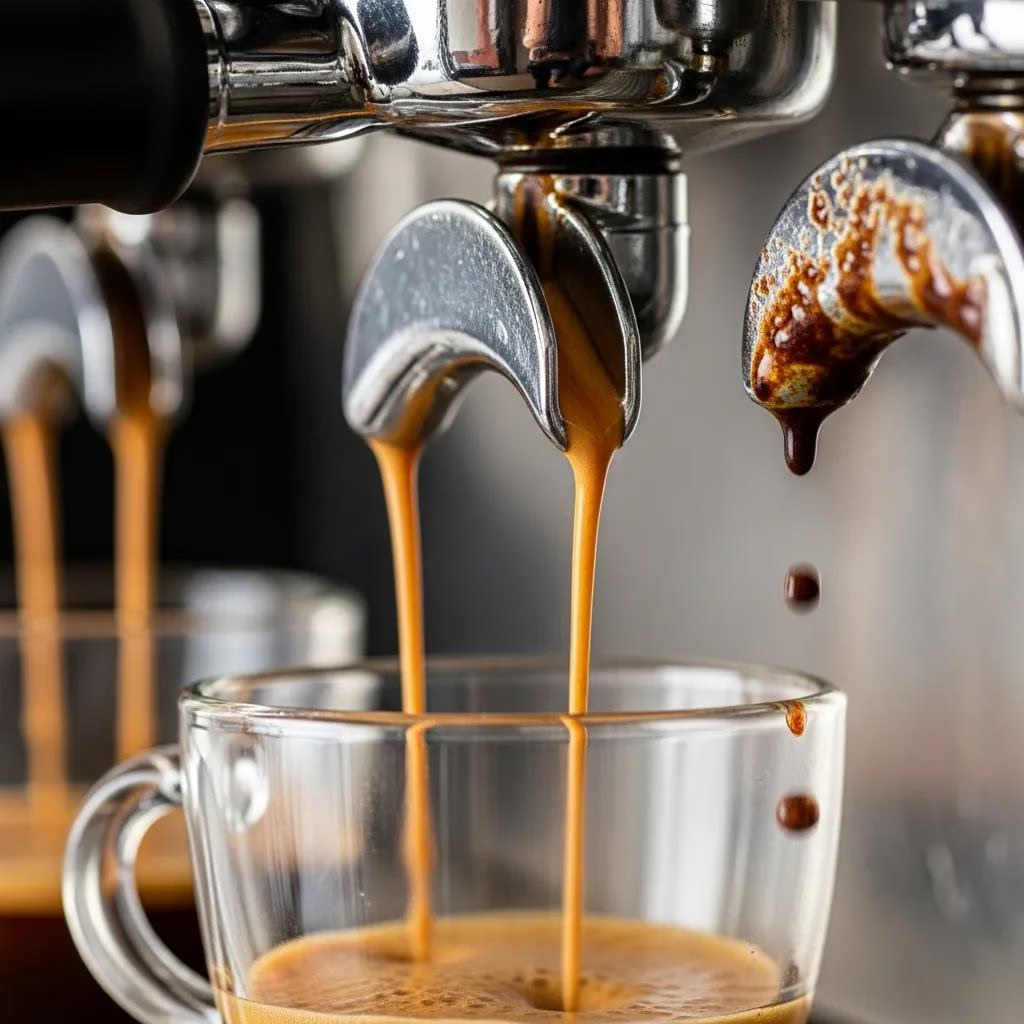
    Close-up of espresso extraction showing crema, representing challenges in achieving high ratio espresso shots

    High-ratio shots can bring challenges such as over-extraction and under-extraction. These problems usually trace back to grind size, uneven tamping, or inconsistent brew time. Knowing how to diagnose and adjust these variables is key to better shots.

    Troubleshooting Extraction Issues: Over-Extraction and Under-Extraction

    Over-extraction pulls excessive bitter compounds. It often occurs with too-fine a grind or an overly long extraction. Fix it by coarsening the grind or shortening the brew time. Under-extraction tastes sour or weak and usually results from a grind that’s too coarse or an extraction that’s too short. Grind finer or lengthen extraction to balance the shot.

    Research shows that extraction variables — especially particle size distribution — have a direct impact on espresso quality.

    Impact of Extraction Variables on Espresso Quality

    This study aims to study the effect and variability of some extraction conditions, such as particle size distribution observed for each grinding level, for the improvement of espresso coffee quality served every day.

    How the variance of some extraction variables may affect the quality of espresso coffees served in coffee shops, C Severini, 2016

    Adjusting Extraction Time and Sensory Evaluation for Best Results

    Extraction time is a critical control. Aim for roughly 25 to 30 seconds for a standard espresso and use that window to assess aroma, flavor, and body. Tasting and timing different beans and ratios will reveal the optimal extraction for each combination.

    Frequently Asked Questions

    What is the ideal brew ratio for different espresso styles?

    Ideal ratios depend on style. A typical traditional espresso uses 1:2. A ristretto (shorter extraction) often sits near 1:1.5. A lungo commonly reaches about 1:3. Use these as starting points and adjust to match the bean and your taste.

    How does grind size affect espresso extraction?

    Grind size controls surface area and extraction speed. Finer grinds expose more surface area and speed up extraction, which can cause over-extraction if not adjusted. Coarser grinds slow extraction and can cause under-extraction. Find the grind that balances flavor given your ratio and machine.

    Can water quality impact espresso flavor?

    Yes. Water mineral content and pH change how compounds dissolve and can alter flavor. Filtered water with a balanced mineral profile gives the most consistent extraction. Very hard water can add off-flavors; very soft water may under-extract. Consider water formulated for coffee when possible.

    What role does tamping play in espresso extraction?

    Tamping compresses the grounds into a uniform puck so water flows evenly. Proper tamping prevents channeling, where water finds weak paths and extracts unevenly. A flat, even tamp helps ensure consistent saturation and balanced flavor.

    How can I troubleshoot a bitter espresso shot?

    Bitter shots typically mean over-extraction. Start by checking your grind — if it’s too fine, coarsen it. Shorten extraction time or lower the dose if needed. Also confirm your tamp is even. These steps usually reduce bitterness.

    What is the significance of extraction time in espresso brewing?

    Extraction time directly affects the shot’s taste. The standard target is 25–30 seconds. A short extraction often tastes sour or weak; a long one tends toward bitterness. Use timing to fine-tune the sensory profile of each shot.

    Conclusion

    Mastering high-ratio extractions upgrades both flavor and your brewing skill. Understand ratios, use stable equipment, and adjust dose, grind, and time to produce consistent, rich shots. Experiment methodically to find your preferred brew, and consult available resources for further tips and tools to refine your technique.

  • How Do I Prevent Static When Grinding Espresso Coffee Beans?

    How Do I Prevent Static When Grinding Espresso Coffee Beans?

    Prevent Static When Grinding Espresso Beans: Practical Tips for Cleaner, More Consistent Grinds

    Static electricity is a common nuisance when grinding for espresso — grounds cling, scatter, or form clumps and that hurts consistency. Understanding the main causes and a few practical fixes helps you get an even grind and more predictable extraction. Below we cover the core science, humidity’s role, grinder choices, and actionable tips and accessories to reduce static.

    Key Takeaways

    • Static comes from friction between grounds and grinder parts.
    • Plastic parts and certain coatings generate more charge than metal.
    • Static causes clumping and uneven extraction.
    • Higher humidity dissipates charge and reduces cling.
    • Humidifiers and proper bean storage preserve moisture and lower static.
    • Burr grinders produce more uniform particles and generally less static than blades.
    • Anti‑static coatings and metal parts reduce cling.
    • Regular cleaning plus brushes or sprays keeps static manageable.
    • Grinding where humidity is slightly higher helps grounds re‑equilibrate and reduces scatter.

    Why Does Static Electricity Occur in Espresso Coffee Grinders?

    Static builds mainly because grinding creates friction between coffee particles and grinder surfaces, transferring electrical charge to the grounds. Materials, burr geometry, gap consistency, and grind speed all affect how much charge accumulates. Knowing these factors helps you choose equipment and habits that limit static.

    Even with a general understanding, accurately predicting or controlling triboelectric charging is still difficult.

    Challenges in Controlling Triboelectric Charge

    Controlling or predicting the amount of triboelectric charge is difficult because the precise mechanism behind triboelectric charging remains not fully understood.

    Triboelectric charging of 3‑in‑1 coffee mixes: Formulation and fouling, 2021

    What Causes Static Buildup During Coffee Grinding?

    Friction is the main cause: grounds rub against burrs, chutes, and collection cups and pick up charge. Plastics and some coatings hold charge more than stainless steel, and burr shape, gap tolerance, and grind rate change the exposed surface area and friction, altering static levels.

    How Does Static Affect Espresso Grind Quality?

    Static makes particles cling and form clusters, producing uneven doses and poor distribution in the puck. That yields uneven extraction — some particles over‑extracted, others under‑extracted — and flatter, less reliable espresso. Reducing static improves uniformity and clarity in the cup.

    How Does Humidity Influence Static in Coffee Grinding?

    Home humidifier next to coffee beans and a grinder, showing humidity's effect

    Humidity is an effective, simple lever. Moist air lets tiny water molecules form conductive paths that let charge bleed off surfaces; in dry air, charges persist and grounds cling. Managing local moisture in your prep area often yields the biggest drop in static with minimal effort.

    Research supports that managing internal moisture increases grind uniformity by reducing static.

    Reducing Static for More Uniform Grinds

    Reducing static through moisture control increases the uniformity of coffee grounds. Internal moisture depends on factors like bean age and the environment.

    Moisture Controlled Triboelectrification During Coffee Grinding, EJ RHEINGOLD, 2024

    What Is the Role of Environmental Humidity in Static Reduction?

    Higher relative humidity creates pathways for charge to dissipate, so fewer clingy bits and easier dosing. Dry conditions strengthen electrostatic attraction and clumping, which is why static is often worse in winter or arid climates.

    How Can You Control Humidity to Minimize Static?

    To manage humidity and cut static, try these practical approaches:

    1. Use a Humidifier: A small humidifier near the prep area in dry seasons raises local humidity and reduces static.
    2. Store Beans Properly: Keep beans airtight to preserve natural moisture and slow drying that increases static.
    3. Grind in a Slightly Humid Space: When possible, grind where household humidity is higher (for example near kitchen steam).

    Grinding increases a bean’s surface area, which makes it more responsive to ambient moisture and helps it re‑equilibrate with the environment.

    Grinding Increases Coffee’s Moisture Interaction

    Grinding raises coffee’s surface area and its interaction with the environment, which affects how the grounds absorb moisture.

    Roasting, grinding, and storage impact on thermodynamic properties and adsorption isotherms of arabica coffee, GHH de Oliveira, 2017

    Which Grinder Types and Features Help Reduce Static in Espresso Grinding?

    Design, materials, and features all influence static. The right combination makes dosing and distribution easier so you get a more consistent puck and better shots.

    Why Are Burr Grinders Preferred for Static Reduction?

    Burr grinders crush between two burrs to create uniform particle sizes rather than chopping, which reduces friction spikes that add static. Many use metal parts and tighter tolerances that lower charge build‑up compared with plastic‑heavy designs.

    What Grinder Features Prevent Static Cling in Coffee Grounds?

    Look for these features when static is a concern:

    • Anti‑Static Coatings: Surfaces treated to dissipate charge help grounds release cleanly.
    • Smarter Design: Enclosed or shaped collection areas reduce scatter and contain charged particles.
    • Stainless Steel or Metal Parts: Metal components tend to hold less static than some plastics.

    What Are the Best Anti-Static Tips and Accessories for Espresso Grinders?

    Anti-static tools for grinders: a brush and spray bottle on a countertop

    Small habits and a few inexpensive accessories greatly reduce static. The steps below are practical and quick to adopt.

    How Do Anti-Static Devices and Accessories Work?

    Anti‑static brushes clear clingy particles; light mists or purpose sprays add tiny surface moisture to lower charge; and built‑in anti‑static elements use conductive materials or coatings. Combined, these tools make dosing neater and reduce waste.

    What Cleaning and Maintenance Practices Reduce Static?

    Routine care keeps static from worsening. Try these steps:

    1. Regular Cleaning: Remove old grounds and fines frequently to reduce friction and charge.
    2. Proper Storage: Store the grinder and removable parts clean and dry to avoid residues that change static behavior.
    3. Use Anti‑Static Sprays or a Light Mist: A sparing, purpose‑built mist or spray can help in some setups — test carefully to avoid damage.

    Combine basic maintenance with humidity control and a brush or spray, and dosing becomes more predictable with less mess.

    Frequently Asked Questions

    What are the signs of static buildup in coffee grinding?

    Signs include grounds sticking inside the grinder, clumps that won’t settle, grounds scattering when dosing, or powder that won’t flow into the portafilter. These point to electrostatic attraction affecting dose and distribution.

    Can the type of coffee beans affect static buildup?

    Yes. Higher‑oil beans (often darker roasts) typically generate less static than dry, lighter roasts. Older, dried beans are more prone to static, so proper storage to preserve moisture helps.

    How does temperature affect static in coffee grinders?

    Temperature plays an indirect role: higher heat can increase friction and volatility, which may raise static; cooler, stable temperatures help reduce surprises. Keep your prep area relatively cool and steady when possible.

    Are there specific brands known for low-static grinders?

    Several reputable manufacturers design grinders with materials and engineering that reduce static. Brands such as Baratza, Breville, and Rancilio are often recommended; check reviews and specs for anti‑static features.

    What role does grinder maintenance play in static reduction?

    Maintenance is essential. Regular cleaning removes residues and fines that disrupt flow and increase charge buildup. Clean burrs and chutes and replace worn plastic parts to keep behavior consistent.

    Can using a different grinding technique help with static?

    Yes. Shorter grind bursts limit heat and friction, and tapping or gently shaking the collection cup after grinding helps loosen clingy particles. Small technique changes often make a noticeable difference.

    Conclusion

    Static need not be part of your espresso routine. With basic knowledge and a few targeted changes — humidity control, choosing grinders with suitable materials, regular cleaning, and simple accessories — you can reduce static, dose more cleanly, and pull more consistent shots. Start with the easiest fixes and adapt to what works in your kitchen and workflow.

  • How to get the most flavor out of old coffee beans

    How to get the most flavor out of old coffee beans

    How to Get the Most Flavor Out of Old Coffee Beans: Expert Tips for Reviving Stale Coffee

    Old coffee beans can often lose their vibrant flavor and aroma, leaving coffee lovers disappointed. Understanding how to revive these beans can transform your coffee experience. This article will explore the science behind coffee bean aging, effective storage methods, brewing techniques, and practical tips for reviving stale coffee beans at home. By the end, you’ll be equipped with expert knowledge to enhance the flavor of your coffee, even from older beans.

    How Does Coffee Bean Aging Affect Flavor and Aroma?

    The aging of coffee beans significantly impacts their flavor and aroma, primarily due to chemical changes that occur over time. As coffee beans age, they undergo oxidation, which can lead to a loss of volatile oils and flavor compounds essential for a rich coffee experience. This process diminishes the beans’ freshness and alters their taste profile, often resulting in a flat or stale flavor. Understanding these changes is crucial for coffee enthusiasts looking to maximize their enjoyment of older beans.

    What Chemical Changes Occur in Old Coffee Beans?

    Old coffee beans experience several chemical changes that affect their flavor. One of the most significant processes is oxidation, where exposure to air leads to the breakdown of flavor compounds. This results in a loss of the aromatic oils that contribute to the coffee’s rich scent and taste. Additionally, the degradation of chlorogenic acids can lead to a more bitter flavor profile. These chemical transformations highlight the importance of freshness in maintaining the quality of coffee.

    Further research emphasizes the role of specific compounds like thiols in this degradation process.

    Coffee Flavor Degradation: Volatile Thiols & Oxidation

    Thiols are among the compounds that have the greatest impact on the flavor of coffee. Due to their high reactivity, thiols are highly unstable and prone to oxidation; their rapid depletion after preparation of a coffee brew and during storage leads to a significant loss of freshness and aroma.

    Volatile thiols in coffee: A review on their formation, degradation, assessment and influence on coffee sensory quality, B Quintanilla-Casas, 2016

    How Does Bean Freshness Influence Coffee Taste?

    Freshness is a critical factor in determining the taste of coffee. Freshly roasted beans contain a complex array of flavor compounds that contribute to a vibrant taste. As beans age, they lose these compounds, leading to a duller flavor profile. Indicators of freshness include the aroma, the presence of oils on the surface, and the overall appearance of the beans. Understanding these indicators can help coffee drinkers select the best beans for optimal flavor.

    What Are the Best Storage Methods to Preserve Coffee Flavor?

    Proper storage methods are essential for preserving the flavor of coffee beans. Exposure to light, air, moisture, and heat can accelerate the degradation of flavor compounds. To maintain the quality of your coffee, it is crucial to store beans in a cool, dark place in an airtight container. This section will explore various storage methods and their effectiveness in prolonging coffee freshness.

    Indeed, the critical role of proper storage in mitigating chemical changes and preserving sensory qualities is well-documented.

    Coffee Bean Storage: Chemical & Sensory Impact

    Impact of chemical changes on the sensory characteristics of coffee beans during storage – ScienceDirect. Storage is one of the most important stages in the processing of coffee beans.

    Impact of chemical changes on the sensory characteristics of coffee beans during storage, N Bragagnolo, 2014

    Which Storage Conditions Slow Down Flavor Degradation?

    To slow down flavor degradation, coffee beans should be stored in a cool, dark environment with controlled humidity levels. Ideal storage conditions include:

    • Temperature Control: Keeping beans at a stable, cool temperature prevents the breakdown of flavor compounds.
    • Humidity Levels: Low humidity is essential to avoid moisture absorption, which can lead to mold growth and flavor loss.
    • Airtight Containers: Using airtight containers minimizes exposure to oxygen, which is a primary factor in oxidation.

    These conditions help maintain the integrity of the coffee beans, ensuring a more flavorful brew.

    How Can Controlled Environments Extend Coffee Bean Freshness?

    Controlled environments, such as vacuum-sealed bags or specialized coffee storage containers, can significantly extend the freshness of coffee beans. Vacuum sealing removes air from the packaging, reducing oxidation and preserving flavor compounds. Additionally, temperature-regulated storage solutions can further protect beans from heat exposure, which can accelerate flavor degradation. Implementing these methods can help coffee enthusiasts enjoy their beans at their best for longer periods.

    How Can Brewing Techniques Enhance Flavor from Old Coffee Beans?

    Brewing techniques play a vital role in extracting flavor from coffee beans, especially older ones. Adjusting variables such as grind size, water temperature, and brewing time can significantly impact the final taste of the coffee. By understanding these techniques, you can enhance the flavor profile of your brew, even when using older beans.

    What Grind Size Adjustments Improve Extraction of Aged Beans?

    The grind size of coffee beans affects the extraction process during brewing. For older beans, a slightly finer grind can increase the surface area, allowing for better extraction of remaining flavor compounds. However, care must be taken not to grind too fine, as this can lead to over-extraction and bitterness. Experimenting with grind size can help you find the optimal balance for enhancing flavor from aged beans.

    How Does Water Temperature and Brewing Time Affect Flavor?

    Water temperature and brewing time are critical factors in coffee extraction. For older beans, using slightly hotter water (around 200°F) can help extract more flavor compounds. Additionally, extending the brewing time can allow for a more thorough extraction, bringing out the remaining flavors in the beans. However, it’s essential to monitor these variables closely to avoid bitterness, which can occur if the coffee is brewed for too long.

    What Espresso-Specific Tips Help Maximize Flavor from Aged Beans?

    Espresso brewing requires specific techniques to maximize flavor extraction, especially from aged beans. Adjusting extraction parameters and using the right tools can significantly enhance the quality of your espresso.

    How to Adjust Espresso Extraction Parameters for Old Beans?

    When brewing espresso with older beans, consider adjusting the extraction time and pressure settings. A longer extraction time can help draw out more flavor, while slightly increasing the pressure can enhance the extraction of oils and compounds. These adjustments can lead to a richer, more flavorful espresso shot, even from beans that have lost some freshness.

    Which Espresso Tools Aid in Flavor Restoration?

    Using the right tools can make a significant difference in espresso quality. High-quality grinders that produce a consistent grind size are essential for optimal extraction. Additionally, investing in a good espresso machine with precise temperature control can help maintain the ideal brewing conditions. These tools can aid in restoring flavor and ensuring a satisfying espresso experience.

    How Can You Revive Stale Coffee Beans at Home?

    Reviving stale coffee beans at home is possible with a few practical steps. While it may not restore them to their original freshness, these methods can enhance their flavor and aroma, making them more enjoyable.

    What Practical Steps Restore Aroma and Taste?

    To restore the aroma and taste of stale coffee beans, consider the following methods:

    1. Rehydration: Lightly misting the beans with water and allowing them to sit for a few hours can help revive some of the lost moisture and aroma.
    2. Oven Method: Gently heating the beans in an oven at a low temperature (around 200°F) for a few minutes can help release trapped oils and enhance flavor.
    3. Flavor Infusion: Adding spices or flavorings during the brewing process can mask some of the stale notes and create a more enjoyable cup.

    These methods can help bring life back to your stale coffee beans, making them more palatable.

    Are There Safe Methods to Rehydrate or Refresh Beans?

    When attempting to rehydrate or refresh stale beans, it’s essential to use safe methods to avoid contamination. Ensure that any water used is clean and free from impurities. Additionally, avoid soaking the beans, as excessive moisture can lead to mold growth. By following safe practices, you can effectively refresh your coffee beans without compromising their quality.

    What Tools and Accessories Support Coffee Flavor Preservation?

    To maintain the flavor of coffee beans, various tools and accessories can be beneficial. These items help create an optimal storage environment and enhance the brewing process.

    Which Storage Containers Best Maintain Freshness?

    Choosing the right storage container is crucial for preserving coffee freshness. Look for containers that are:

    • Airtight: Prevents exposure to air, reducing oxidation.
    • Opaque: Blocks light, which can degrade flavor compounds.
    • Material: Glass or ceramic containers are often preferred for their non-reactive properties.

    Using these types of containers can significantly extend the shelf life of your coffee beans.

    How Do Coffee Grinders and Brewers Impact Flavor Extraction?

    The choice of coffee grinder and brewer can greatly influence flavor extraction. Burr grinders are recommended for their ability to produce a consistent grind size, which is essential for even extraction. Additionally, using a high-quality brewer that allows

    for precise control over brewing parameters can enhance the overall flavor profile of your coffee. Investing in these tools can lead to a more satisfying coffee experience, even with older beans.

    Old coffee beans may lose their aroma and flavor, however they do not have to go to waste. Following these suggestions, even coffee beans past their prime can deliver an enjoyable cup.

Secret Link